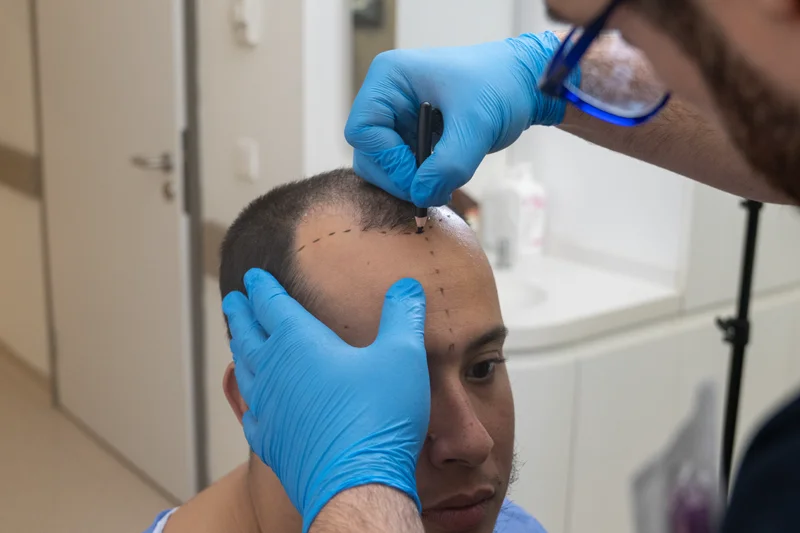
TL;DR — Key Takeaways
AI for medical tourism is the use of large language models, speech models and machine-learning scoring to automate the repetitive parts of an international patient case — inquiry triage, translation, medical file reading, quote assembly and follow-up — while a human coordinator keeps clinical and commercial authority. AI for medical tourism is not a replacement for coordinators. It is a way to make each coordinator carry three to five times the caseload without dropping response times.
Nine things worth knowing before you read further:
Your patients are already using AI before they reach you. OpenAI reported that more than 40 million people ask ChatGPT healthcare questions every single day, and roughly 7 in 10 of those health conversations happen outside normal clinical hours.[^1]
AI is now the first stop, not the last. A December 2025 Rock Health survey found 32% of US adults had used an AI chatbot for health information — double the prior year — and 81% of those users took a real-world action afterwards.[^2]
They still verify. Among those who acted, 42% went on to search other sources and 40% consulted a healthcare provider.[^2] That verification window is exactly where a facilitator wins or loses the case.
Adoption is broad but shallow. Stanford HAI's 2026 AI Index found 88% of organisations use AI in at least one business function, yet fewer than 10% have fully scaled it in any single function.[^3]
Accuracy is the top risk, and it is measurable. 74% of organisations now cite inaccuracy as their leading AI risk, and Stanford's assessment of 26 leading foundation models found hallucination rates ranging from 22% to 94%.[^3]
Compliance is live, not theoretical. The EU AI Act's Article 50 transparency obligations — the rules that catch chatbots and synthetic content — became applicable on 2 August 2026.[^4] Annex III high-risk obligations were deferred to 2 December 2027.[^4]
The market keeps expanding. 2026 global medical tourism estimates range from roughly $38.6 billion (Grand View Research) to $46.78 billion (Fortune Business Insights) to $84.5 billion (Global Market Insights) to $109.34 billion (Research and Markets), depending on how each firm defines the revenue pool.[^5][^6][^7][^8]
Speed still decides who wins. The MIT/InsideSales lead response study remains the sharpest argument for AI triage: contacting an inbound lead within five minutes rather than thirty raises the odds of qualifying it by roughly 21 times.
The highest-ROI first project in AI for medical tourism is not a chatbot. It is structured intake and lead scoring — the two places where AI reduces coordinator hours without touching clinical judgement.
What is AI for medical tourism, and what does it actually change?
Quick answer: AI for medical tourism is software that reads, writes, translates, summarises and scores — applied to the four operational bottlenecks of an international patient case: inquiry triage, medical file intake, quotation and aftercare.
AI for medical tourism is the application of language models, speech recognition, document extraction and predictive scoring to the operational workflow of an international patient case. In plain terms: software now reads, writes, translates, summarises, classifies and ranks — and a medical tourism agency's daily work is overwhelmingly reading, writing, translating, summarising, classifying and ranking.
Consider what a facilitator's coordinator actually does in a working day. She opens a WhatsApp message in Arabic asking about a gastric sleeve. She opens an Instagram DM in French about hair transplant grafts. She receives a 40-page PDF of blood work and a CT report in German. She writes a treatment summary for a partner hospital in Turkish. She chases four patients who went quiet after receiving a quote. She builds a price comparison across three hospitals. She books an airport transfer. She writes a post-operative check-in message on day 7.
Every one of those tasks has a language, document or classification component. That is precisely the surface area where AI for medical tourism produces measurable gains.
What it does not change is authority. Clinical authority remains with the treating physician. Commercial authority remains with the agency. Legal authority remains with whoever signs the consent form. AI in this industry is an acceleration layer, not a decision layer. Agencies that confuse those two things generate liability faster than they generate revenue.
What AI is not, in this context
A short list of misconceptions worth clearing early, because they cost agencies money:
AI for medical tourism is not a diagnostic tool for your agency. You are not licensed to diagnose. Neither is your chatbot.
AI is not a replacement for a medical second opinion. It can prepare the file that a physician reviews. It cannot issue the opinion.
AI for medical tourism is not a substitute for a CRM. A model with no memory of the patient, no audit trail and no permission structure is a text generator, not an operating system for your agency.
AI for medical tourism is not automatically cheaper. Poorly governed AI produces rework, and rework in medical tourism is expensive because it happens in front of an anxious patient.
The three layers of an AI for medical tourism stack
Layer | What it does | Typical tools | Who owns it |
|---|---|---|---|
Interface layer | Chat widgets, WhatsApp bots, voice agents, inbox assistants | Conversational AI, IVR, messaging APIs | Marketing / front desk |
Reasoning layer | Summarising files, drafting replies, translating, extracting data, scoring leads | Large language models, OCR, document AI, scoring models | Operations |
System of record layer | Storing the patient case, permissions, audit log, consent, financials | Medical tourism CRM, ledger, document vault | Management / compliance |
The mistake most agencies make when adopting AI for medical tourism is buying the interface layer first because it demos well. The layer that actually compounds is the system of record, because AI output is only as good as the structured data it can read and write back into. An assistant that drafts a beautiful reply but cannot log the outcome of that reply has created work, not removed it.
Why does AI matter for medical tourism agencies in 2026?
Quick answer: AI for medical tourism matters in 2026 because patients now research treatment conversationally with a model before they contact any agency, arriving better informed and expecting faster, more expert answers than a manual operation can deliver.
Because the patient's research behaviour changed faster than the industry's sales process did.
For twenty years, the medical tourism funnel began with a search engine. A patient in Manchester typed "hair transplant Turkey cost," clicked three or four blue links, filled in a form, and waited. That patient arrived at your inbox uninformed, unqualified and price-anchored to whatever the cheapest listing said.
That funnel has been substantially rewired. Consumers now interrogate a model conversationally before they ever fill in a form. Pew Research Center's August 2026 survey found that a quarter of Americans use AI chatbots to diagnose symptoms, with similar shares using them to interpret information from their providers such as a diagnosis or lab results.[^9] KFF's March 2026 tracking poll found one in three adults had turned to AI chatbots for health information — the same share that uses social media for it.[^10] West Health and Gallup, surveying more than 5,500 US adults, found 46% of those who used AI for health information said it made them more confident when talking to a provider.[^11]
Read that last figure again from a facilitator's perspective. Your inbound lead in 2026 is not less informed. She is more confident, arrives with a vocabulary she did not have two years ago, and expects you to match or exceed the quality of explanation she has already received for free at 11pm from a chatbot.
That is the competitive reality that makes AI for medical tourism a survival question rather than an efficiency question, and it is why AI for medical tourism now appears on operating plans that ignored it a year ago.
What the numbers say about the AI for medical tourism opportunity
Signal | Figure | Source | What it means for a facilitator |
|---|---|---|---|
Daily health questions to ChatGPT | 40 million+ per day | OpenAI, Jan 2026[^1] | Your category is being explained by a model, not by you |
Health conversations outside clinical hours | ~70% | OpenAI, Jan 2026[^1] | Night and weekend response capability is now a differentiator |
US adults using AI chatbots for health info | 32% (double YoY) | Rock Health, Dec 2025[^2] | Pre-inquiry education is happening without you |
Users who acted after an AI health answer | 81% | Rock Health, Dec 2025[^2] | AI conversations convert to real behaviour |
Users who verified with other sources | 42% | Rock Health, Dec 2025[^2] | There is a verification window you can own |
Organisational AI adoption | 88% | Stanford HAI, 2026[^3] | Your competitors have started |
Organisations that fully scaled AI | <10% | Stanford HAI, 2026[^3] | Almost nobody has finished — the gap is still open |
Top-cited AI risk | Inaccuracy (74%) | Stanford HAI, 2026[^3] | Governance is the differentiator, not model access |
The final two rows are the strategically important ones. Adoption is near-universal and execution is rare. In an industry as operationally messy as medical tourism, the agencies that build disciplined AI workflows in the next twelve months will hold a structural cost advantage over those that bolt a chatbot onto a website and call it transformation.
Market size context for AI for medical tourism
Any serious plan needs sizing, and sizing in this industry is genuinely contested. Published 2026 estimates for the global medical tourism market vary by nearly a factor of three: Grand View Research values it at $38.6 billion for 2026,[^5] Fortune Business Insights at $46.78 billion,[^6] Global Market Insights at $84.5 billion,[^7] and Research and Markets at $109.34 billion.[^8] Grand View also reports that Turkey held the largest single-country revenue share at 13.5% in 2025, with the private provider segment holding 54.8%.[^5]
Treat all of these as directional ranges, not facts. They differ because some count only medical spend while others include travel, accommodation and companion spend. What matters for planning is the consistent direction: double-digit compound growth across every methodology, in a market where operational capacity — not patient demand — is the binding constraint for most agencies. AI for medical tourism is fundamentally a capacity play.

Alt text: Coordinator using AI for medical tourism to triage international patient inquiries
Where does AI fit in the medical tourism patient journey?
Quick answer: AI for medical tourism fits wherever the work is language-heavy or document-heavy — inquiry, intake, quoting and follow-up — and stops wherever the work is clinical judgement.
Rather than asking "should we use AI for medical tourism," map the journey and ask which stages are language-heavy, document-heavy or judgement-heavy. Language and document stages are safe automation targets. Judgement stages are not.
Journey stage | Language / document load | Judgement load | AI role | Human role |
|---|---|---|---|---|
1. Discovery & research | High | Low | Content, AI-search visibility, entity presence | Strategy, claims approval |
2. First inquiry | High | Low | Instant multilingual reply, intent classification | Escalation on complex cases |
3. Pre-qualification | Medium | Medium | Structured questioning, readiness scoring | Final go/no-go |
4. Medical file intake | Very high | Low | OCR, extraction, structuring, summarisation | Verification of extracted values |
5. Clinical review | Low | Very high | File packaging for physician review only | Physician decides — always |
6. Quotation | Medium | Medium | Draft assembly across hospitals, currency, inclusions | Pricing authority, margin |
7. Objection handling | High | Medium | Draft responses, evidence retrieval | Negotiation, trust building |
8. Booking & logistics | Medium | Low | Itinerary drafting, document checklists, reminders | Exceptions, visa problems |
9. In-country care | Low | High | Real-time interpretation support | Presence, escalation, empathy |
10. Discharge & aftercare | High | Medium | Scheduled check-ins, symptom triage prompts, PROM collection | Clinical escalation |
11. Review & referral | High | Low | Review request sequencing, testimonial drafting | Consent, authenticity |
Two observations from this map.
First, the highest-volume AI for medical tourism opportunities cluster at stages 2, 4 and 10 — inquiry, file intake and aftercare. These are also the three stages where most agencies are weakest, because they are unglamorous and repetitive.
Second, stage 5 has a hard line through it. No agency should let a model perform clinical review. The model can assemble, redact, translate and summarise the file so a physician spends four minutes instead of twenty-five. The opinion belongs to the physician.
How can AI qualify international patient leads faster?
Quick answer: AI for medical tourism qualifies leads by classifying intent instantly, asking the coordinator's questions in the patient's language around the clock, and scoring readiness across five pillars so humans spend their hours only on viable cases.
This is the single highest-return application of AI for medical tourism, and it is the one most agencies skip because chatbots are more fun to build.
The economics are simple. A typical facilitator generating 600 inquiries per month will find that somewhere between 5% and 15% are genuinely viable — the rest are price shoppers, wrong-procedure inquiries, patients with contraindications, patients who cannot travel, or bots. Coordinators nevertheless spend the same first ten minutes on all 600. That is roughly 100 coordinator hours per month spent discovering that 500 people were never going to book.
AI collapses that discovery cost in three steps.
Step 1: Use AI for medical tourism to classify intent on arrival
Before any reply is drafted, the model classifies the inbound message on a fixed set of dimensions: procedure category, urgency, budget signal, travel feasibility signal, language, channel, and whether the message contains a clinical red flag requiring immediate human escalation.
This is a classification task, not a generation task, and classification is where models are most reliable. Keep the output schema tight — enumerated values, no free text — and log every classification for later auditing.
Step 2: Ask the qualifying questions the coordinator would ask
A well-designed intake assistant asks the same six to ten questions your best coordinator asks, in the patient's language, at 2am, without fatigue. For a bariatric case that means current BMI, comorbidities, prior abdominal surgery, medication list, target travel window, companion status and funding method. For a dental implant case it means bone density history, existing prosthetics, smoking status, prior grafting and photographs.
The critical design rule here is that the assistant collects, it does not conclude. "Your BMI suggests you may not be a candidate" is a clinical statement your agency is not licensed to make. "Thank you — I've recorded a BMI of 31 and passed your file to our medical coordinator for review" is not.
Step 3: Score readiness with AI for medical tourism, then route
Once structured data exists, scoring becomes arithmetic rather than intuition. A defensible readiness model spans five pillars:
Scoring pillar | What it measures | Example inputs |
|---|---|---|
Clinical fit | Whether the patient is plausibly treatable at partner facilities | Procedure match, comorbidities, prior surgeries, age, imaging availability |
Financial capacity | Whether the patient can fund the case | Stated budget, funding method, deposit willingness, package tier viewed |
Travel readiness | Whether the patient can physically get there | Residence country, visa route, passport validity, companion, leave availability |
Intent & engagement | Whether the patient is actually moving | Response latency, message depth, documents supplied, call attendance |
Source quality | Historical conversion by acquisition channel | Channel, campaign, referral partner, marketplace |
Two design decisions matter more than the weights themselves. First, missing pillars should be excluded from the composite average rather than scored as zero — a patient who has not yet disclosed budget is not a bad lead, merely an incomplete one, and zeroing that pillar buries good cases. Second, scoring models should be vendor-controlled with fixed profiles selected per procedure, not open-ended sliders that every agency user can edit. Editable weights feel empowering for about three weeks and then quietly destroy comparability across your own pipeline.
We build our own scoring around exactly this structure, and the deeper mechanics — band calibration, decay rules, outcome feedback loops — are covered in our guide to lead scoring for medical tourism. (Editorial note: verify first-person operational claims with the product team before publication.)
Why speed multiplies every AI for medical tourism gain
Scoring is only valuable if it triggers action fast. The MIT and InsideSales lead response research — still the most-cited work on this question — found that contacting an inbound lead within five minutes versus thirty minutes increased the odds of qualifying that lead by roughly 21 times, and that the odds of contact drop sharply after the first hour.
Medical tourism amplifies this effect for a specific structural reason: time zones. A patient in Riyadh messaging a Turkish agency at 1am Istanbul time will, in a manual operation, wait seven or eight hours. In that window she has messaged four competitors and asked a chatbot for a second opinion. AI for medical tourism is, in the most literal sense, a way to be awake.
How do you use AI for multilingual patient communication?
Quick answer: use AI for medical tourism translation to draft in the patient's language and register, with a locked glossary, a single canonical case language, and mandatory human review of any clinical instruction.
Language is the defining operational constraint of this industry, and it is where AI for medical tourism delivers its most immediate, most visible return.
A Turkish agency serving Gulf, European and African markets may handle Arabic, English, French, German, Russian and Romanian in a single week. Hiring native speakers for all six is impossible for most agencies. Using generic machine translation produces messages that read as machine translation — which, in a category where trust is the entire product, is actively damaging.
Modern language models sit between those two options, and used properly they are close to native quality. Used carelessly they are worse than nothing.
The four rules of AI for medical tourism translation
Rule 1 — Translate register, not just words. Gulf Arabic patient communication expects a formality and courtesy structure that a literal English-to-Arabic rendering destroys. A German patient expects precision, structure and named credentials. A Brazilian patient expects warmth. Prompt for register explicitly: "Translate into Modern Standard Arabic suitable for a Gulf patient, formal but warm, keeping medical terms in Arabic with the English term in parentheses on first use."
Rule 2 — Never let the model translate clinical instructions unsupervised. Post-operative medication instructions, dosage, and red-flag symptom lists must be translated by a qualified human or supplied from a pre-approved translated template library. This is a place where a 22% error rate is not an inconvenience; it is a patient safety event.
Rule 3 — Build a locked glossary. Your procedure names, package names, hospital names, doctor names and legal disclaimers should never be translated freshly each time. Maintain a term base and instruct the model to use it verbatim.
Rule 4 — Keep the source of truth in one language. Store the case notes in one canonical language and generate outbound translations from it. Agencies that let each coordinator write in their own language end up with a case file no one can audit.
What multilingual AI for medical tourism actually replaces
Task | Manual cost | With AI | Human still required for |
|---|---|---|---|
First reply to a non-English inquiry | 10–20 min or a delay of hours | Under 60 seconds | Tone review on high-value cases |
Translating a patient's medical report | 1–3 hours or paid translator | 2–5 minutes | Verification of values and drug names |
Writing a hospital-facing case summary | 20–30 min | 3–5 minutes | Clinical accuracy check |
Localising a landing page | Days, agency fees | Hours | Native review, cultural claims |
Live consultation interpretation | Interpreter booking | Real-time assist | Complex or emotional consultations |
The pattern across all five rows of AI for medical tourism translation is identical: AI removes the drafting cost, the human retains the verification cost. Agencies that try to remove both costs are the ones that end up in trouble.
How can AI read and structure medical files?
Quick answer: AI for medical tourism reads uploaded reports, images and scans, extracts defined fields with page-level provenance, flags anything uncertain for human verification, and writes structured values into the patient record.
Medical file intake is the least discussed and most valuable application of AI for medical tourism, because it converts unstructured chaos into database rows.
Patients send what they have. That means phone photographs of blood panels, scanned PDFs from a Cairo laboratory, a WhatsApp voice note describing a diagnosis, a DICOM CD, a German discharge summary, and occasionally a screenshot of another agency's quotation. A coordinator currently opens each of these, reads it, and retypes the relevant values into a form.
A document AI pipeline does the following instead:
Ingest any format — image, PDF, DICOM, audio.
OCR and transcribe into raw text, preserving page references.
Extract a defined schema: patient demographics, diagnosis codes, key lab values with units and reference ranges, imaging findings, medication list, allergies, prior surgeries, and the issuing institution and date.
Flag anything unreadable, contradictory, or outside expected ranges for human verification rather than guessing.
Redact identifiers when the file is being shared with a partner hospital that has not yet received consent for full disclosure.
Summarise into a one-page physician-facing brief.
Write back into the patient record with a link to the source page for every extracted value.
Step 7 is the one that separates a real system from a demo. Every extracted value must be traceable to its source document and page. Without provenance, no physician will trust the summary, and no auditor will accept the record.
The verification discipline behind AI for medical tourism extraction
Given Stanford's finding that hallucination rates across leading models ranged from 22% to 94%,[^3] extraction must be treated as a draft. Practical safeguards:
Numeric values require confidence thresholds. Below threshold, the field is left empty and flagged, never guessed.
Units are validated against expected ranges. A haemoglobin of 140 is plausible in g/L and impossible in g/dL.
Drug names are matched against a reference list, not free-typed.
The physician reviews the source, not the summary, for any value that changes the treatment decision.
Done properly, this reduces file preparation from 45 minutes to under 10, at a materially lower error rate than tired humans retyping numbers at 7pm. Done improperly, it creates a confident, well-formatted, wrong medical record — which is worse than no record at all.

Alt text: AI for medical tourism extracting values from an international patient medical report
How do you use AI to build treatment plans and quotes?
Quick answer: AI for medical tourism assembles quotes from structured partner price tables rather than inventing figures, produces multi-hospital comparisons in seconds, and leaves pricing authority with a human.
Quotation is where medical tourism agencies leak the most margin, and where AI for medical tourism produces the fastest financial return after lead scoring.
The typical failure looks like this. A coordinator wants to quote a knee replacement. She checks a spreadsheet for Hospital A's price, remembers Hospital B raised theirs last month, guesses at the implant surcharge, adds a hotel figure from memory, forgets the companion's transfer, applies last week's exchange rate, and sends a PDF. Three days later the hospital invoices a different number and the agency absorbs the difference.
An AI-assisted quoting workflow inverts this:
Structured price tables hold each partner's rates by procedure, tier, implant type, length of stay and inclusion set — maintained as data, not prose.
The model assembles, not invents. It selects applicable line items based on the case's structured attributes and drafts the patient-facing narrative around them.
Currency is applied at quote time from a live rate with a defined margin buffer.
Inclusions and exclusions are generated from a controlled list, so "does this include the implant?" stops being answerable three different ways by three coordinators.
Multi-hospital comparison is produced automatically, because the same structured case can be priced against every partner in seconds.
The last point deserves emphasis. Offering a patient a genuine three-hospital comparison — with honest differences in accreditation, surgeon volume, waiting time and price — converts substantially better than a single take-it-or-leave-it figure, because it positions the facilitator as an advisor rather than a salesperson. Producing that comparison manually costs an hour. Producing it with structured data and a model costs a minute.
What AI for medical tourism must never do in quoting
It must not set clinical scope. Whether a case needs one implant or two is a surgical decision.
It must not approve discounts. Margin authority stays human.
It must not present estimates as fixed prices. Language matters: "estimated, subject to physician assessment on arrival" is not a legal formality, it is an accurate description of reality.
It must not cite comparative cost savings without sourcing. Any "70% cheaper than the US" claim in a quote is a third-party industry estimate requiring verification, not a fact your agency has audited.
Can AI write your medical tourism content and win AI search?
Quick answer: AI for medical tourism content works for structure, drafts, translation and metadata, but visibility in AI answers comes from sourced statistics, question-formatted headings, comparison tables and verifiable first-hand experience.
Partly — and the second half of that question is now more important than the first.
Search behaviour in this category is shifting from ten blue links to synthesised answers. When a patient asks a model "which country is best for a dental implant if I live in Manchester," the model produces an answer assembled from sources it considers credible. That is a distribution channel, and it has its own optimisation logic. This is generative engine optimisation, and it rewards different things than classic SEO did.
What AI search engines actually reward from medical tourism publishers
Signal | Why it matters to a model | How to implement |
|---|---|---|
Direct answer blocks | Models lift TL;DR and key-takeaway sections as ready answers | Open every article with a summary block that answers the title question |
Specific numbers | Claims with figures are cited far more often than vague claims | Use dated, sourced statistics, not "many patients" |
Question-formatted headings | Maps cleanly to FAQ extraction and schema | Phrase H2s as the questions patients and operators actually ask |
Authoritative citation | Models weight .gov, .edu, journals and major research bodies | Cite regulators and research institutions, not competitor blogs |
Comparison tables | Row-by-row claims extract cleanly | Tabulate anything comparative |
Inline definitions | Links entities to knowledge graphs | Define terms as "X is a…" in the body |
Explicit dates and recency | Current-year content is favoured in AI answers | Date the article, state the year, refresh figures |
First-person experience | Signals real operational knowledge rather than synthesis | Use "our team" claims — but only ones you can defend |
Our own approach to this is documented in more depth in our medical tourism SEO guide, which covers the keyword architecture side that this article deliberately skips.
Where AI for medical tourism writing helps, and where it destroys trust
AI for medical tourism content production is genuinely useful for outlines, first drafts of non-clinical sections, translation of approved content into new markets, metadata, schema markup, internal link suggestions and repurposing long articles into social formats.
It is dangerous for clinical claims, outcome statistics, before-and-after descriptions, doctor biographies, accreditation status and anything a regulator could read as an inducement. Publishing an unverified success rate is not an SEO problem; it is an advertising-standards problem in most of your target markets.
There is also a quality floor issue. Pew found that consumer confidence in finding reliable health information has been falling, and health media brands remain the most-cited sources in AI answers.[^9] Generic, unsourced AI content does not get cited by models and does not build the entity authority that gets you into answers. Thin AI content is not a shortcut into AI search; it is a fast route to invisibility in it.
How does AI improve follow-up and post-discharge continuity?
Quick answer: AI for medical tourism aftercare runs scheduled multilingual check-ins tied to the recovery protocol, collects patient-reported outcomes, and escalates red-flag answers to a human — without ever triaging clinically itself.
Most agencies lose more revenue after discharge than before it, and almost none measure it.
The pattern is familiar. A patient completes surgery, flies home, and the agency's involvement effectively ends at the airport. Six weeks later she has a question about swelling. Nobody answers, or an unqualified coordinator answers badly. She posts a mediocre review. Her cousin, who was watching the whole journey, books with someone else. The lifetime value of that case — reviews, referrals, revision procedures, family cases — evaporates.
A continuity engine powered by AI for medical tourism addresses this with scheduled, structured, multilingual contact:
Day 1, 3, 7, 14, 30, 90 and 365 check-ins, timed to the procedure's actual recovery protocol rather than a generic cadence.
Structured symptom questions with defined escalation triggers. Not "how are you feeling?" but a short set of procedure-specific questions with thresholds.
Automatic escalation to a human — and to the treating facility — when a response crosses a red-flag threshold.
PROM collection (patient-reported outcome measures) at 90 and 365 days, which is both a clinical quality signal and the most credible marketing asset an agency can own.
Review and referral requests timed to satisfaction peaks rather than sent blindly at day 7.
The escalation design is the part that carries risk. The system must never triage clinically. It detects that an answer crossed a threshold and routes to a human. It does not tell the patient whether the swelling is normal.
This capability also happens to be the most under-built area in the category. Our team's assessment of the operational gap in post-discharge workflows is what drove us to prioritise a continuity engine in the product roadmap. (Editorial note: confirm roadmap references with product before publication.) Retention sequencing deserves its own treatment, but the principle is simple: contact is scheduled, structured and escalated, never improvised.
How can AI improve coordinator quality and training?
Quick answer: AI for medical tourism can read every call and chat against a defined rubric, turning coordinator coaching from opinion into evidence and surfacing compliance breaches the same week they happen.
Coordinator performance variance is the hidden P&L line in every facilitator business. Two coordinators working the same lead source with the same prices routinely convert at rates differing by a factor of two. Most managers know this and cannot explain it, because nobody has time to read 400 conversations a week.
AI for medical tourism can read 400 conversations a week.
A quality-scoring workflow transcribes calls and ingests chat threads, then evaluates each interaction against a defined rubric: Did the coordinator respond within the SLA? Did she collect the required qualification fields? Did she disclose fees accurately? Did she avoid making clinical claims? Did she confirm next steps and book a specific follow-up time? Did she use the approved language for outcomes and guarantees?
The output is a per-coordinator, per-conversation score with cited examples — which converts coaching from opinion into evidence. It also functions as a compliance control, because it surfaces the moment a coordinator promised a result the agency cannot deliver.
Two implementation cautions. First, staff must know they are being scored, and in several jurisdictions must consent to call recording and processing. Second, the rubric must reward patient outcomes, not just script compliance, or you will optimise your team into robots and lose the empathy that actually closes medical cases.
What about AI on the supply side — hospitals, capacity and pricing?
Quick answer: on the supply side, AI for medical tourism turns scattered hospital emails into slot inventory, quote history into price benchmarks, and public registries into accreditation monitoring.
Facilitators obsess over demand and neglect supply, and AI for medical tourism is usually deployed on only one side of that equation. Yet the constraint that most often kills a booked case is supply-side: the surgeon has no slot in the patient's travel window, the price changed, or the accreditation the patient asked about lapsed.
AI for medical tourism has three useful supply-side applications.
Capacity and slot intelligence with AI for medical tourism. Partner hospitals rarely expose a real calendar. Coordinators email and wait. A structured approach captures every quoted availability into a slot inventory, and a model reads inbound hospital emails to update expected lead times per surgeon per procedure. Over time you build an empirical picture of who actually delivers a slot in ten days versus who says they will.
Price intelligence and benchmarking. Every quote you receive is a data point. Extracted, normalised and stored, those quotes become a benchmark that tells you whether a partner's new rate is a market move or an outlier — and gives you a negotiating position based on evidence rather than instinct.
Credential and accreditation monitoring. Accreditations expire. Licences are suspended. Surgeons move. A monitoring workflow that periodically checks public registries and flags changes protects you from the worst possible conversation: telling a patient mid-journey that the credential you advertised no longer exists.
None of these require sophisticated modelling. They require the discipline to capture supply-side information as structured data instead of leaving it in individual inboxes. That is exactly what a purpose-built medical tourism lead management system is for.
What are the compliance rules for AI in medical tourism?
Quick answer: compliance for AI for medical tourism now has three layers — the EU AI Act's transparency duties, applicable since 2 August 2026; data protection law including GDPR and KVKK; and national healthcare advertising rules that constrain what any AI copywriter may claim.
This section changed materially in August 2026, and many agencies have not noticed.
The EU AI Act now applies to your AI for medical tourism chatbot
The EU AI Act (Regulation 2024/1689) entered into force on 1 August 2024 and became generally applicable on 2 August 2026, including the Article 50 transparency obligations that cover chatbots and synthetic content.[^4][^12] Under the AI Omnibus agreed in 2026, the heavier high-risk regime was deferred: Annex III high-risk obligations move to 2 December 2027, and Annex I product-embedded systems to 2 August 2028.[^4][^12] Generative systems already on the market before 2 August 2026 received a four-month grace period to meet Article 50(2), to 2 December 2026.[^13] Maximum penalties reach €35 million or 7% of global turnover.[^4]
What this means practically for a facilitator marketing to EU residents:
Disclose that the patient is talking to an AI. Not buried in a privacy policy — in the conversation.
Label synthetic content. AI-generated images used in marketing fall within the transparency logic.
Maintain AI literacy in your team. The Article 4 AI literacy obligation has been in force since February 2025.
Do not assume the high-risk deferral exempts you. It defers documentation and conformity obligations, not transparency ones.
Territorial scope follows the output, not the office. An agency in Istanbul or Dubai marketing to German patients is within reach of the Act.
Data protection stacks on top of AI for medical tourism rules
The AI Act does not replace GDPR.[^4] Medical data is special-category data, which means:
Regime | Applies when | Key AI-specific obligation |
|---|---|---|
GDPR (EU/EEA) | Any EU-resident patient data | Lawful basis for special-category data, DPIA for high-risk processing, transfer safeguards |
UK GDPR | UK patients | Equivalent, with separate transfer regime |
KVKK (Türkiye) | Processing in Türkiye | Explicit consent for health data, transfer restrictions, registry obligations |
HIPAA (US) | US covered entities and their business associates | BAA required before any vendor touches PHI |
PDPL (Gulf states) | Saudi, UAE and regional equivalents | Consent, localisation requirements in some sectors |
Three practical rules cover most of the risk. One: never paste identifiable patient data into a consumer AI product. Use enterprise agreements with contractual guarantees against training on your data. Two: record consent for AI-assisted processing explicitly as part of intake, in the patient's language. Three: keep an audit trail of what the model saw, what it produced and who approved it — because "the AI wrote it" is not a defence in any jurisdiction.
Advertising and medical claims made by AI for medical tourism content
Separately from AI regulation, most target markets restrict how healthcare can be advertised. Türkiye's health tourism authorisation framework, UK ASA rules, German competition law and Gulf health authority rules all constrain outcome claims, before-and-after imagery and inducement offers. An AI copywriter has no knowledge of these rules unless you encode them into its instructions and review its output. Build a prohibited-claims list into every content prompt and review every generated marketing asset against it.
What should you never use AI for in medical tourism?
Quick answer: never use AI for medical tourism to diagnose, interpret results for a patient, advise on medication, triage emergencies, fabricate reviews, generate synthetic before-and-after imagery, impersonate a clinician or commit money.
A clear red-line list is more valuable than any tool recommendation, because the risk in AI for medical tourism is concentrated in a small number of prohibited uses. Our position on AI for medical tourism is that the following are never appropriate, regardless of model quality:
Diagnosis or clinical eligibility decisions. Ever. Not as a "preliminary indication," not with a disclaimer.
Interpreting imaging or lab results for a patient. Extraction for physician review, yes. Interpretation to the patient, no.
Medication guidance, including dosage, interactions or post-operative pain management.
Triaging emergencies. A post-operative patient reporting chest pain must reach a human and an emergency number immediately, through a hard-coded rule, not a model's judgement.
Generating fabricated reviews, testimonials or patient stories. This is fraud in most jurisdictions and reputationally fatal in all of them.
Producing synthetic before-and-after images. Even labelled, this is indefensible in a medical marketing context.
Impersonating a doctor. A named "Dr" persona on a chat widget is a serious misrepresentation.
Autonomous financial commitments. No model should confirm a final price, issue a refund or commit to a guarantee.
Processing identifiable patient data on consumer-tier tools without a data processing agreement.
Deciding to reject a patient without human review. Scoring routes and prioritises; humans decline.
How do you actually build an AI stack? Build, buy or embed?
Quick answer: most facilitators should embed AI for medical tourism inside a vertical CRM rather than buying disconnected point tools, because AI output only compounds when it writes back into a single governed patient record.
Approach | What it looks like | Strengths | Weaknesses | Best for |
|---|---|---|---|---|
Buy point tools | Standalone chatbot, standalone translator, standalone transcription | Cheap, fast, no engineering | Fragmented data, no audit trail, duplicated patient records | Agencies under 5 staff testing feasibility |
Embed in a vertical CRM | AI features inside a medical tourism CRM | Shared patient record, permissions, audit log, scoring tied to outcomes | Dependent on vendor roadmap | Most facilitator agencies and IPDs |
Build custom | In-house pipelines on model APIs | Fully tailored, owns the IP | Requires engineering, security and compliance capability; ongoing maintenance | Large groups with 20+ staff and a technical team |
Hybrid | Vertical CRM plus custom pipelines for one differentiating workflow | Focus engineering where it creates advantage | Integration burden | Growing agencies with one clear edge |
The determining question when choosing an AI for medical tourism stack is not budget. It is where your patient record lives. If AI outputs cannot be written back into a single governed patient record with permissions and an audit log, you are generating disconnected text, and the compounding benefit never arrives. This is the practical argument for embedding AI for medical tourism inside the system of record rather than around it.
What does a 90-day AI implementation roadmap look like?
Quick answer: sequence AI for medical tourism as governance first, then inquiry triage, then scoring, then document extraction, then aftercare — and do not start with the chatbot.
Phase | Days | Focus | Deliverables | Success measure |
|---|---|---|---|---|
Phase 1: Foundations | 1–15 | Data and governance | AI usage policy, prohibited-claims list, consent language updated, vendor DPAs signed, staff AI literacy session | Policy signed, zero consumer-tool usage on patient data |
Phase 2: Intake | 16–40 | Inquiry triage | Intent classification live, multilingual first-reply automation, escalation rules, SLA timers | Median first-response time under 5 minutes |
Phase 3: Qualification | 41–60 | Structured scoring | Intake question sets per procedure, readiness scoring live, routing rules | ≥80% of new leads carry a complete score |
Phase 4: Documents | 61–75 | File intake | OCR pipeline, extraction schema, provenance links, physician brief template | File prep time cut by ≥50% |
Phase 5: Continuity | 76–90 | Aftercare | Post-discharge check-in sequence, escalation thresholds, PROM collection, review requests | ≥60% of discharged patients respond at day 7 |
Two sequencing notes for any AI for medical tourism rollout. Governance comes first, not last — retrofitting consent language after you have processed 2,000 patient files is expensive and sometimes impossible. And do not start with the chatbot. It is the most visible project and the least valuable one until intake structure exists behind it.
How do you measure the ROI of AI for medical tourism?
Quick answer: measure AI for medical tourism against response time, coordinator caseload, qualification completeness, quote cycle time, quote accuracy variance, aftercare response rate and a logged AI incident count.
Vanity metrics will tell you your AI for medical tourism project succeeded. Use these instead.
Metric | Definition | Baseline to capture before you start | Realistic target |
|---|---|---|---|
Median first-response time | Inquiry received to first human-quality reply | Measure by channel and hour | Under 5 minutes, 24/7 |
Leads per coordinator per month | Active cases handled at quality | Current caseload | +100–200% |
Qualification completion rate | Share of leads with a complete structured profile | Usually under 30% manually | Above 80% |
Cost per qualified lead | Marketing spend ÷ qualified leads | Benchmark against your own trailing twelve months | −20–40% |
File-to-quote cycle time | Documents received to quote issued | Often 2–5 days | Under 24 hours |
Quote accuracy variance | Quoted vs invoiced amount | Frequently untracked | Under 3% |
Day-7 aftercare response rate | Patients responding to first check-in | Usually near zero | Above 60% |
Review generation rate | Reviews per completed case | Typically 5–15% | Above 30% |
AI escalation rate | Share of AI conversations requiring human rescue | — | Falling month over month |
Hallucination incidents | Logged instances of incorrect AI output reaching a patient | — | Trending to zero, never assumed to be zero |
The final two rows are non-negotiable. Any agency deploying AI for medical tourism without an incident log is not managing risk; it is hoping.

Alt text: Dashboard measuring AI for medical tourism performance across agency conversion metrics
What are the most common mistakes agencies make with AI?
Quick answer: the recurring failures with AI for medical tourism are buying the demo instead of the workflow, automating outbound before intake, treating output as finished, skipping the audit trail, configuring everything in English, and tolerating shadow AI.
Buying the demo, not the workflow. A chat widget that impresses in a sales call and cannot write into your patient record is a cost.
Automating the wrong end with AI for medical tourism. Automating outbound marketing while intake remains manual just increases the volume of leads you fail to answer.
Treating AI for medical tourism output as finished. Every AI output in this industry is a draft until a human with the relevant authority approves it.
Ignoring the audit trail. When a patient disputes what they were told, you need the record. Systems that generate text without logging it are liabilities.
Over-indexing on English. If 60% of your inquiries arrive in Arabic and your AI stack was configured in English, you have automated your smallest segment.
Letting each coordinator use their own tools. Shadow AI use — staff pasting patient files into personal consumer accounts — is now one of the most common data protection failures in healthcare organisations, and it happens because the official tooling is too slow.
Confusing adoption with scaling. Stanford's data is blunt on this: 88% adopt, under 10% scale.[^3] The difference is governed workflows, not enthusiasm.
Glossary: AI for medical tourism terms every operator should know
Large language model (LLM) — A model trained on text that generates and transforms language. The engine behind drafting, translation and summarisation.
Hallucination — Confident output that is factually wrong. Measured hallucination rates across 26 leading models spanned 22% to 94% in Stanford's 2026 assessment.[^3]
Retrieval-augmented generation (RAG) — A design in which the model answers only from your own documents (price lists, protocols, hospital data), reducing invention.
Structured extraction — Converting unstructured documents into defined fields with types and validation.
Provenance — The traceable link between an extracted value and the exact source document and page it came from.
Patient Readiness Score — A composite pre-qualification score combining clinical fit, financial capacity, travel readiness, intent and source quality.
PROM — Patient-reported outcome measure; a standardised post-treatment questionnaire.
Generative engine optimisation (GEO) — Optimising content to be cited inside AI-generated answers rather than ranked in link lists.
Article 50 (EU AI Act) — The transparency provisions covering AI interaction disclosure and synthetic content labelling, applicable from 2 August 2026.[^4]
DPIA — Data protection impact assessment, required under GDPR for high-risk processing including many AI use cases.
Human-in-the-loop — A workflow design where a person reviews and approves AI output before it reaches a patient.
Shadow AI — Unapproved staff use of consumer AI tools on company or patient data.
Frequently asked questions about AI for medical tourism
Below are the questions agency operators and facilitators ask most often about AI for medical tourism.
Is AI for medical tourism legal? Yes, AI for medical tourism is legal, with conditions. The tooling is legal; specific uses are regulated. In the EU, transparency obligations under Article 50 of the AI Act have applied since 2 August 2026, with high-risk obligations deferred to 2 December 2027 for Annex III systems.[^4][^12] Data protection law applies independently and health data is special-category data everywhere it is regulated.
Will AI replace medical tourism coordinators? No — it changes what a coordinator does. Drafting, translating and retyping shrink; relationship management, escalation handling and clinical liaison expand. The agencies losing headcount are those whose coordinators only did the drafting.
Can a chatbot tell a patient whether they are a candidate for surgery? No. Eligibility is a clinical determination. A chatbot may collect information and confirm it has been passed to a medical coordinator. It must not conclude.
What is the cheapest way for a small agency to start with AI for medical tourism? Structured intake and lead scoring. It requires no chatbot, touches no clinical judgement, and typically returns the largest share of coordinator hours.
How do I stop AI inventing prices or medical facts? Constrain it to your own data using retrieval, keep price tables as structured records rather than prose, and require human approval before any figure reaches a patient.
Do I have to tell patients they are talking to AI? In the EU, yes, under Article 50.[^4] Outside it, disclosure is still the correct commercial choice — patients discovering the deception later is more damaging than the disclosure ever is.
Does AI for medical tourism content hurt my SEO? Unverified, unsourced content hurts you. Well-sourced content that answers real questions performs regardless of how the first draft was produced. The differentiator is verification and citation, not authorship.
How do I handle AI in a language my team does not speak? Use AI to draft, but retain at least one native reviewer per major market for anything patient-facing and high-stakes. Locked glossaries and approved templates reduce, but do not eliminate, the need.
What is the biggest hidden risk in AI for medical tourism? Shadow AI — staff pasting patient reports into personal consumer accounts because the sanctioned workflow is too slow. The fix is a faster sanctioned workflow, not a stricter memo.
Where this leaves your agency
Quick answer: AI for medical tourism is now an operating layer, not an experiment — and the advantage belongs to agencies that govern it rather than agencies that merely install it.
The strategic picture for AI for medical tourism in 2026 is unusually clear. Patients have already adopted AI in their health research at scale — 40 million health questions a day to a single model, mostly outside clinical hours.[^1] Organisations have adopted AI almost universally but scaled it barely at all.[^3] Regulation has arrived for transparency and is arriving for high-risk uses.[^4] And the market you sell into keeps growing at double digits under every published methodology.[^5][^6][^7][^8]
That combination produces a narrow, real window. The agencies that convert AI from a novelty into a governed operating layer — structured intake, honest scoring, verified extraction, disciplined quoting, genuine aftercare, logged incidents — will run at a cost per case that manual competitors cannot match, in a category where response speed and trust decide the sale.
The ones that stop at a chatbot, and treat AI for medical tourism as a website feature, will have automated the least valuable part of the job and taken on the compliance exposure anyway.
References
[^1]: Healthcare Dive, "40M users turn to ChatGPT daily for health questions: OpenAI," 6 January 2026. https://www.healthcaredive.com/news/40-million-use-chatgpt-health-questions-openai/808861/ [^2]: eMarketer, "Consumer use of AI for health questions doubles, and most users act on AI responses," reporting Rock Health December 2025 survey. https://www.emarketer.com/content/consumer-use-of-ai-health-questions-doubles--most-users-act-on-ai-responses [^3]: Stanford Institute for Human-Centered Artificial Intelligence, 2026 AI Index Report. https://hai.stanford.edu/ai-index/2026-ai-index-report [^4]: European Commission, "AI Act — Shaping Europe's digital future," regulatory framework and implementation timeline. https://digital-strategy.ec.europa.eu/en/policies/regulatory-framework-ai [^5]: Grand View Research, Medical Tourism Market Size & Share Report, 2026–2035. https://www.grandviewresearch.com/industry-analysis/medical-tourism-market [^6]: Fortune Business Insights, Medical Tourism Market Size, Share, Global Growth Report. https://www.fortunebusinessinsights.com/industry-reports/medical-tourism-market-100681 [^7]: Global Market Insights, Medical Tourism Market Size, Trends & Forecast, 2026–2035. https://www.gminsights.com/industry-analysis/medical-tourism-market [^8]: Research and Markets, Medical Tourism Market Report 2026. https://www.researchandmarkets.com/reports/5939752/medical-tourism-market-report [^9]: Pew Research Center, "From Diagnoses to Treatments, Why Americans Use AI Chatbots for Health," 25 August 2026. https://www.pewresearch.org/science/2026/08/25/from-diagnoses-to-treatments-why-americans-use-ai-chatbots-for-health/ [^10]: KFF, "KFF Tracking Poll on Health Information and Trust: Use of AI for Health Information and Advice," March 2026. https://www.kff.org/public-opinion/kff-tracking-poll-on-health-information-and-trust-use-of-ai-for-health-information-and-advice/ [^11]: Gallup, "Americans Turning to AI to Supplement Healthcare Visits," West Health-Gallup Center on Healthcare in America, 15 April 2026. https://news.gallup.com/poll/707789/americans-turning-supplement-healthcare-visits.aspx [^12]: Inside Global Tech (Covington), "EU AI Act Update: Timeline Relief, Targeted Simplification, and New Prohibitions," 28 May 2026. https://www.insideglobaltech.com/2026/05/28/eu-ai-act-update-timeline-relief-targeted-simplification-and-new-prohibitions/ [^13]: Stibbe, "AI Act reloaded? What the latest AI Act changes mean in practice," 8 June 2026. https://www.stibbe.com/publications-and-insights/ai-act-reloaded-what-the-latest-ai-act-changes-mean-in-practice
Published 27 August 2026 by Medical Tourism CRM. Reviewed for operational accuracy by our editorial team.
Disclaimer: This article is provided for informational purposes for medical tourism agencies, facilitators and hospital international patient departments. It does not constitute legal, medical, financial or regulatory advice. Market-size figures are third-party industry estimates that vary significantly by methodology and should be verified independently. Regulatory requirements — including the EU AI Act, GDPR, KVKK and national health advertising rules — change frequently and differ by jurisdiction; consult qualified legal counsel in each market in which you operate. Clinical decisions are the exclusive responsibility of licensed treating physicians.
Run your medical tourism agency on one platform
Leads, pipeline, travel, pricing, chat and email marketing — live in a day, no credit card required.
Start your free trial