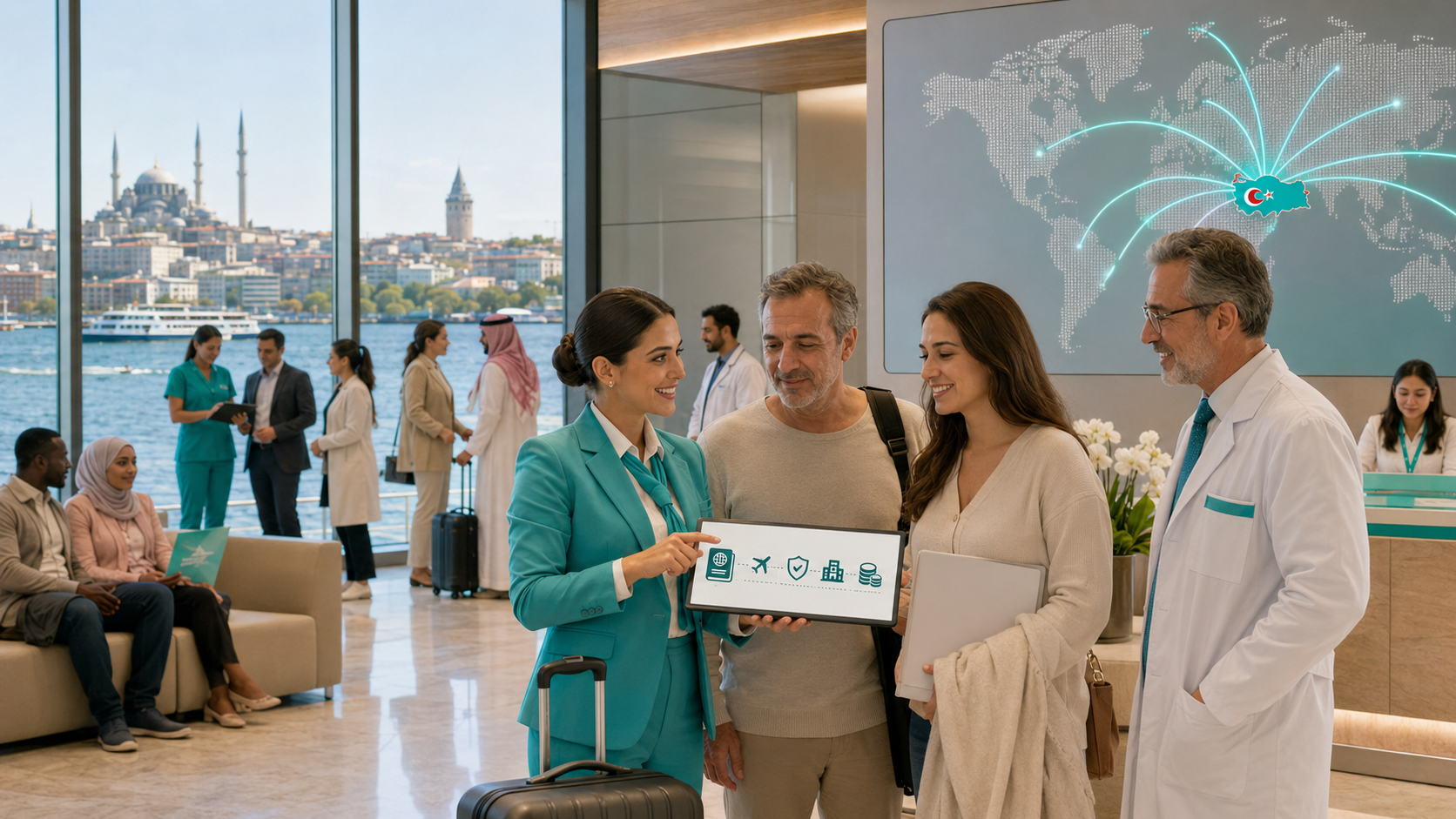
TL;DR: Key Takeaways
Turkey is the single largest destination by patient volume in the entire global medical tourism industry. Official figures cited from USHAŞ and the Turkish Ministry of Health put 2024 volume at approximately 1.5 million international health tourists generating around $3 billion in revenue, with some industry sources citing figures closer to 2 million patients for the same year.
Turkey has just overhauled its entire regulatory system. A sweeping "International Health Tourism and Tourist Health Regulation" published in April 2025 introduced the mandatory HealthTürkiye digital portal, compulsory TUSKA accreditation for providers (full compliance required by end of 2026), and — as of January 2026 — mandatory complication insurance for every international patient undergoing a surgical or interventional procedure.
Turkey is, by a wide margin, the global leader in hair transplant volume, with an estimated 700,000 to over one million procedures performed annually and Istanbul alone reportedly accounting for around 1.2 million procedures in 2025 across more than 350 dedicated clinics — this single category alone made up an estimated 51.9% of Turkey's medical tourism revenue in 2025.
Market size estimates for 2026 vary from roughly $2.5 billion to $4.6 billion across commercial research providers, all agreeing on double-digit annual growth, with the Turkish government's own stated ambition to reach $20 billion in medical tourism revenue by 2028.
Turkey's cost advantage is real and substantial, typically running 50–70% below Western Europe and North America for comparable procedures, reinforced by 42–52 JCI-accredited hospitals (estimates vary by source) and direct flight access to 129 countries from Istanbul within a four-hour radius.
The same popularity that built this market has also attracted a well-documented unlicensed-provider problem, with repair cases linked to unlicensed prior hair transplant procedures rising from 6% in 2021 to 10% in 2024 according to the ISHRS Practice Census — precisely the gap Turkey's 2025–2026 regulatory overhaul is designed to close.
What Is Medical Tourism in Turkey?
Medical tourism in Turkey is the practice of international patients travelling to the country specifically to receive medical, dental, cosmetic, or fertility treatment. Among every market covered in this guide series — Australia, Germany, the United Kingdom, and Dubai — Turkey occupies a singular position: it is the destination all four of those other guides kept returning to. Australian, German, and British outbound patients travel to Turkey more than to almost any other single country, and Dubai's own regional competitive landscape is shaped in part by Turkey's dominance. This report turns the lens around and treats Turkey as the primary subject rather than the recurring reference point.
Turkey's scale is genuinely without close comparison in this series. Where Dubai's roughly 691,000 annual medical tourists made it the most purely inbound-dominant market covered so far, Turkey's own government-cited figures — approximately 1.5 million international health tourists in 2024, with some industry estimates running closer to 2 million — put it in an entirely different volume tier, and Turkey holds the single largest revenue share of any individual country in the global medical tourism industry, ahead of markets several times its economic size.
For agencies, facilitators, and hospital international patient departments (IPDs), what makes Turkey especially significant right now is timing: the country has just undergone the most sweeping regulatory overhaul of any market in this guide series, introduced specifically in response to the same unlicensed-provider and complication risks that UK, Australian, and German outbound patients have documented travelling to Turkey. Understanding this new framework — the HealthTürkiye portal, mandatory TUSKA accreditation, and compulsory complication insurance — is now a precondition for operating credibly in this market, not an optional compliance detail.
This positions Turkey uniquely within this guide series in one further respect: it is the only market covered so far where the destination country itself has responded directly, through binding national law, to the exact complication and unlicensed-provider risks documented from the source-market side in the Australia, Germany, and UK reports. Where those three guides recommended that agencies build voluntary aftercare and verification services to close a documented gap, Turkey has now made a version of that protection compulsory for every provider and intermediary in the market — a genuinely different regulatory posture from a destination country than anything else covered in this series.
What Is the Size of the Medical Tourism Market in Turkey?
As with every market in this series, commercial research providers diverge substantially on market value, though there is unusually strong convergence around the underlying patient-volume and revenue figures cited by Turkish government sources specifically.
Source | Reported 2026 Market Size | Forecast | CAGR |
|---|---|---|---|
Coherent Market Insights | USD 4.60 billion | USD 12.01 billion by 2033 | 14.7% |
Mordor Intelligence | USD 4.59 billion | USD 9.49 billion by 2031 | 15.64% |
Persistence Market Research | USD 2.5 billion | USD 6.2 billion by 2033 | 13.8% |
Global Market Insights | USD 4.1 billion | USD 17.3 billion by 2035 | — |
Future Market Insights | USD 4.2 billion | USD 9.1 billion by 2036 | 8.0% |
Despite this familiar spread in commercial revenue modelling, Turkey is unusual among the markets in this series in having a genuinely consistent, government-anchored patient-volume figure that multiple independent sources converge around: Turkey welcomed approximately 1.5 million international health tourists in 2024, generating around $3 billion in revenue, based on USHAŞ (Turkey's international health services company, operating under the Ministry of Health) and TÜİK data. A separate industry synthesis citing the Turkish Health Ministry puts the 2024 figure closer to 2 million medical tourists for the same approximate revenue figure — the volume estimates diverge somewhat, but the sub-$3 billion revenue figure for 2024 appears consistently across independent sources, which is a meaningfully stronger evidence base than the market-size data available for Australia, Germany, or the UK earlier in this series.
Turkey's own government growth targets are unusually explicit and aggressive relative to the other markets covered so far. Ministry-linked projections indicate the industry will generate $10–12 billion by 2025, with revenues reaching $20 billion by 2028 — a target the government treats as a central pillar of national economic growth strategy, not merely a healthcare sector outcome. This represents one of the most ambitious and explicitly stated national medical tourism growth targets of any country covered in this guide series, exceeding even Dubai's coordinated but comparatively more modest growth trajectory.
Why the numbers still disagree, despite better government data: as throughout this series, commercial revenue forecasts diverge because providers apply different assumptions about which segments to include — hair transplant volume alone accounted for an estimated 51.9% share of Turkey's medical tourism revenue in 2025 according to one major research provider, a concentration in a single treatment category that most other markets in this series do not exhibit, and different providers weight this segment differently in their overall market models. Agencies and IPDs should anchor on the more consistent government-linked patient-volume and revenue figures — roughly 1.5–2 million patients and $3 billion in 2024 — and treat the wide range of 2026–2035 forecasts as directional commercial modelling layered on top.
Is Turkey's Medical Tourism Market Growing in 2026?
Yes, and more explicitly government-driven than in any other market in this series bar Dubai. Turkey allocated $50 billion for public healthcare in 2024, with the Ministry of Health and Turkey's Social Security Institution (SSI) contributing a combined total exceeding $80 billion, funding modern medical infrastructure explicitly intended to attract international patients. The Turkish government established the General Directorate of Investments and Establishments as early as 2011 specifically to facilitate healthcare investment and attract medical tourists, giving Turkey one of the longest-running dedicated state medical tourism promotion efforts of any market in this series, predating Dubai's more recent coordinated push by over a decade.
Is Turkey an Inbound or Outbound Medical Tourism Market?
Overwhelmingly and almost exclusively inbound. Like Dubai, Turkey shows no meaningful documented outbound flow of its own residents travelling abroad for treatment — the entire policy, infrastructure, and marketing apparatus described throughout Turkish government sources is built around attracting patients into the country, not managing demand leaving it.
Why Patients Choose Turkey
Turkey's inbound value proposition rests on a combination that few competing destinations can replicate simultaneously: substantial cost savings, genuine clinical accreditation, and unmatched geographic accessibility from an enormous catchment of source countries.
The cost advantage is the most consistently cited driver across every source examined for this guide. Patients gain 50–70% cost savings compared with Western Europe and North America, a figure that holds consistently across dental, cosmetic, hair transplant, and bariatric procedure categories, and that persists even after accounting for travel and accommodation costs in most documented cases throughout this series' Australia, Germany, and UK reports.
Geographic accessibility compounds this cost advantage in a way that is genuinely distinctive among the markets covered so far. Istanbul's position gives patients a four-hour flight radius to 129 countries, with Istanbul Airport connecting directly to more than 120 countries — a combination of centrality and connectivity that materially reduces travel fatigue for high-acuity older patients specifically, a factor increasingly relevant given that patients aged 65 and older represent one of the fastest-growing segments of Turkey's international patient base, growing at a projected 16.43% compound annual rate through 2031 as this cohort increasingly seeks bundled cardiac, orthopaedic, and oncology treatment packages.
Clinical credibility, while historically a weaker point relative to Germany's century-old university hospital reputation, has been substantially built out through private hospital accreditation investment. Estimates of JCI (Joint Commission International)-accredited hospital count vary by source — from 42 to 52 accredited facilities depending on when the count was taken — but Turkey consistently ranks among the countries with the most JCI-accredited facilities outside the United States, anchored by large private hospital groups including Acıbadem Healthcare Group, Memorial Healthcare Group, Medicana Health Group, and Medical Park Hospitals Group, all of which run dedicated international patient programmes with multilingual coordinators. Private multispecialty hospital chains captured an estimated 46.43% of 2025 international patient revenue, with private hospitals overall accounting for an estimated 76% market share — a private-sector dominance more pronounced than in Germany's more balanced public-university and private hospital mix.
Currency structuring adds a further layer of price stability specifically valuable to international patients: private hospital chains typically channel foreign invoices in euros or dollars, insulating international patient revenue — and therefore quoted prices — from lira volatility even as domestic Turkish inflation affects local input costs, giving international patients a materially more stable and predictable pricing experience than domestic Turkish patients face for the same underlying services.
Which Treatments Dominate, and Which Patients Come
Turkey's treatment mix is more concentrated in a small number of dominant categories than any other market covered in this guide series. Hair transplantation is, by a considerable margin, the single largest category: Turkey performs an estimated 700,000 to over 1,000,000 hair transplant procedures annually according to the Turkish Healthcare Travel Council, with Istanbul alone reportedly accounting for around 1.2 million procedures in 2025 across more than 350 dedicated clinics — a scale of concentration in one treatment category and one city that has no real parallel among the other four markets in this series.
Cosmetic surgery, dental treatment, and cardiovascular procedures round out the other major demand categories, with cosmetic surgery specifically identified as Turkey's leading treatment type by overall demand share in several forecasts, and oncology procedures — supported by growing proton therapy, CAR-T, and robotic surgery capacity — projected to expand at a faster 16.56% compound annual growth rate through 2031 than the market overall, signalling a deliberate strategic shift toward higher-acuity, higher-value specialties beyond Turkey's traditional cosmetic and dental strength.
Istanbul, Ankara, and Antalya are consistently identified as Turkey's fastest-growing medical tourism provinces, while newer government planning has specifically earmarked cities including Edirne, Rize, Van, and Nevşehir as emerging medical tourism hubs — reflecting a deliberate national strategy to distribute infrastructure investment and patient volume beyond the three dominant metropolitan centres over time.
How Do International Patients Access Healthcare in Turkey?
Turkey's visa system for medical tourists is notably more accessible than the other markets in this guide series, though the surrounding regulatory framework governing the treatment itself has just been substantially tightened.
Visa Requirements
Visa policy for medical travel to Turkey depends entirely on the traveller's nationality, and — unlike Australia's Subclass 602, Germany's national visa process, the UK's Standard Visitor visa, or Dubai's facility-sponsored medical visa — many international patients require no special medical visa category at all. Citizens of a substantial number of countries, including the United States, can enter Turkey visa-free for up to 90 days for both tourism and medical purposes, with an optional e-Visa available online in approximately three minutes for patients who prefer or require one, typically costing around $50.
Where a dedicated Turkish Medical Visa is used, it functions as a short-stay visa class, generally valid for 90 days within each 180-day period, with duration ultimately depending on the specific treatment plan and the applicant's nationality, and issued as either single-entry or multiple-entry depending on the medical condition and follow-up requirements. Standard documentation includes a passport valid for at least six months beyond the planned entry date with at least two blank visa pages, and — where applicable — a letter of invitation from the treating Turkish hospital, which many major hospital groups issue directly to support the visa approval process. Not every nationality is eligible for e-Visa or visa-on-arrival processing; some visitors, depending on nationality, must apply in advance at a Turkish embassy or consulate rather than relying on electronic or arrival processing.
Payment and Insurance
As throughout this guide series, genuine inbound medical tourists in Turkey are self-pay patients — there is no reciprocal public-system access framework comparable to Germany's EU Directive pathway, and Turkey's own social security system does not extend routine coverage to international visitors. What has changed substantially, and what now sets Turkey apart from every other market in this series, is the introduction of mandatory complication insurance, detailed in the regulatory section below.
What Regulatory Framework Governs Medical Tourism in Turkey?
Turkey has just implemented the most comprehensive regulatory overhaul of any market covered in this guide series, and any agency or facilitator operating in this space needs current, precise fluency in the new framework — much of which only became fully binding in 2025 and 2026.
The International Health Tourism and Tourist Health Regulation
In April 2025, Turkey's Ministry of Health published a comprehensive regulation in the Official Gazette titled the "International Health Tourism and Tourist Health Regulation," introducing sweeping new oversight of the medical tourism sector through a centralised digital platform. This followed a period of documented concern within Turkey's own government about the proliferation of unregulated and illicit operators, whose mishandling of procedures resulted in complications and, in some reported cases, deaths — concerns that directly parallel the complication statistics documented in this series' UK and Australia guides, but which Turkey's government has now moved to address through binding national regulation rather than leaving to individual clinic self-policing.
The HealthTürkiye Portal
The centrepiece of the new framework is HealthTürkiye, a centralised online platform serving as the backbone for all health tourism operations in the country. All healthcare facilities and intermediary organisations — meaning both hospitals and clinics and facilitator agencies — operating in the medical tourism sector must fully integrate with the portal, and the HealthTürkiye portal has processed every foreign patient case since May 2025, covering visa, data, and quality checks in a single system. If a clinic or agency is not registered on the HealthTürkiye portal, it is not authorised to serve international patients — making portal registration the first verification step any prospective patient, or any agency vetting a partner clinic, should confirm before proceeding.
Authorised facilities and intermediaries are permitted to display the official "HealthTürkiye" logo only once they meet the required standards, and this authorisation is actively and continuously monitored: facilities and agencies are evaluated on an ongoing basis based on patient complaint rates and satisfaction surveys, with authorisation certificates remaining valid only so long as providers continue meeting the HealthTürkiye Performance Criteria — certificates cannot be transferred between organisations, and institutions that lose certification are barred from reapplying for six months.
Mandatory TUSKA Accreditation
The regulation also mandates accreditation from TUSKA — the Turkish Health Services Quality and Accreditation Institute — for all hospitals and medical centres serving international patients, with full compliance required by the end of 2026. TUSKA accreditation sits alongside, rather than replacing, existing international accreditation such as JCI, giving Turkey a genuinely dual-layer accreditation requirement (national TUSKA plus, in many cases, international JCI) that is more prescriptive than the accreditation landscape in any of the other four markets in this series.
Mandatory Complication Insurance
The single most consequential new patient-protection measure, and one with genuinely no direct equivalent anywhere else in this guide series, is the requirement — effective from January 2026 — that all international patients undergoing surgical or interventional procedures in Turkey must obtain complication insurance, alongside standard travel health insurance. This coverage is specifically tailored to address unforeseen, medically recognised complications arising after a surgical or interventional procedure, generally extending coverage for six months post-procedure, with some plans offering up to twelve months of protection. Existing facilities had until 31 December 2025 to bring their own complication insurance arrangements into compliance.
This directly addresses the exact gap documented repeatedly throughout this guide series: the UK's British Dental Association found 86% of dentists had treated complications from overseas dental work, and Australia's outbound dental patients faced a similarly documented re-treatment burden, in both cases with no formal insurance mechanism specifically covering the complication itself. Turkey's new mandatory complication insurance requirement is, in effect, a national-level regulatory response to precisely the risk that agencies throughout this series have been advised to build voluntary protection around — Turkey has now made a version of that protection compulsory by law, a genuinely significant development for any facilitator whose value proposition has included complication risk management.
One important limitation for agencies to communicate clearly to patients: the mandatory complication insurance policy is valid exclusively within Turkey, meaning any revision surgery or follow-up care must also take place within the country for reimbursement eligibility — patients who return home and seek local corrective treatment, the pattern documented throughout the Australia, Germany, and UK guides in this series, would not be able to claim against this specific Turkish policy for that home-country treatment.
Additional Operational Requirements
Beyond accreditation and insurance, the regulation imposes several further operational standards on facilities and intermediary agencies: all agencies assisting international patients must run a 24/7 call centre in at least two languages, all healthcare facilities and agencies must maintain foreign-language websites, and USHAŞ — the Ministry of Health-affiliated international health services company — conducts inspections, with any organisation found non-compliant given 30 business days to correct deficiencies before facing certification consequences.
What This Means for Agencies
For any agency or facilitator working in the Turkish market, this new framework is simultaneously an opportunity and an obligation. It is an opportunity because it gives Turkey a genuinely differentiated, defensible patient-safety story relative to less-regulated competing destinations — complication insurance and centralised portal registration are concrete, verifiable protections an agency can point to rather than an abstract quality claim. It is an obligation because HealthTürkiye registration is not optional: an intermediary organisation operating outside this system is, by the regulation's own terms, not authorised to serve international patients at all, regardless of how established or reputable that agency may otherwise be.
How Much Does Treatment in Turkey Cost Compared to Other Destinations?
Turkey's cost positioning is the sharpest and most consistently documented of any market in this guide series, reflecting its dominant position as the reference "budget" comparator throughout the Australia, Germany, and UK reports.
Hair Transplant Cost Comparison
Destination | Typical Cost | Position |
|---|---|---|
Turkey (Istanbul) | $2,500–$6,000 all-inclusive package (2025–2026 estimates) | Budget-tier, dominant global volume leader |
UK private | £8,000–£12,000 for comparable 3,000-graft procedure | Premium |
United States | Among the highest average procedure fees globally per 2023 ISHRS Practice Census | Premium |
Turkish clinics predominantly use all-inclusive package pricing rather than pure per-graft billing in the premium segment, though per-graft pricing (typically $1–$2 per graft) remains available; flat-rate packages tend to be more cost-effective for patients needing higher graft counts. A 3,000-graft procedure costing £8,000–£12,000 in London can range from roughly £1,650–£2,800 in Istanbul — the single largest savings category documented anywhere in this guide series.
Dental and Bariatric Cost Comparison
Treatment | UK Private Cost | Turkey Cost | Approximate Saving |
|---|---|---|---|
All-on-four dental implants (full mouth) | £8,000–£15,000 | £2,800–£3,200 | ~65–80% |
Bariatric surgery | £8,000–£15,000 | £2,500–£4,500 | ~65–70% |
These figures are consistent with the Turkey-specific cost data already documented in this series' UK guide, where NHS bariatric surgery waiting times exceeding 12–18 months were identified as a compounding driver alongside the pure cost differential.
Why This Matters for Facilitator Agencies
Turkey's position as the reference low-cost comparator throughout this entire guide series is precisely why the new mandatory complication insurance and HealthTürkiye registration requirements matter so much commercially. An agency that can demonstrate a partner clinic's HealthTürkiye registration, TUSKA accreditation status, and complication insurance compliance is offering verifiable protection against exactly the risk profile — the 86% UK dentist-reported complication rate, the 47% five-year Australian implant re-treatment rate — that has defined the cautionary narrative around Turkish medical tourism throughout this series. This is now a genuine, regulation-backed differentiator rather than a marketing claim alone.
What Are the Biggest Opportunities for Entrepreneurs in Medical Tourism in Turkey in 2026?
Given Turkey's overwhelming inbound dominance and its newly overhauled regulatory environment, the clearest opportunities in 2026 cluster around compliance, verification, and the specific gaps the new framework has not yet fully closed.
1. HealthTürkiye and TUSKA Compliance Consultancy
Given that full TUSKA accreditation compliance is not required until the end of 2026, and that HealthTürkiye portal integration is a relatively new operational requirement for many established clinics and agencies, there is a clear, time-limited opportunity for consultancy services helping providers navigate registration, accreditation, and the ongoing HealthTürkiye Performance Criteria evaluation process before the compliance deadline tightens further.
2. Cross-Border Complication Insurance and Continuity Services
Because Turkey's new mandatory complication insurance is explicitly valid only within Turkey, and does not cover revision or follow-up treatment conducted in the patient's home country, there is a clear, well-evidenced gap for supplementary services that bridge this specific limitation — home-country aftercare coordination, documentation transfer, and potentially complementary insurance products that extend meaningful protection beyond the mandatory Turkish-only policy, directly addressing the pattern of unmanaged home-country corrective treatment documented throughout the Australia, Germany, and UK guides in this series.
3. Verified Provider Directories and Credential-Checking Services
Given the well-documented rise in unlicensed-provider complications — repair cases linked to unlicensed prior hair transplant procedures rose from 6% in 2021 to 10% in 2024 according to the ISHRS Practice Census — there remains a substantial addressable gap for independent, agency-side verification services that confirm a given provider's HealthTürkiye registration, TUSKA accreditation, and JCI status before a patient commits, particularly given the sheer number of providers now competing in Turkey's exceptionally high-volume hair transplant and dental markets.
This opportunity is time-sensitive in a way most others in this guide series are not: because TUSKA accreditation only becomes fully mandatory at the end of 2026, a verification service built now can establish itself as the trusted reference point precisely during the period when the market still contains a meaningful mix of compliant and non-compliant providers — a window that will narrow considerably once the deadline passes and enforcement, in principle, filters out non-compliant operators more systematically.
4. Specialist Facilitation for the Growing 65+ Patient Segment
Given the documented 16.43% compound annual growth rate projected for patients aged 65 and older seeking bundled cardiac, orthopaedic, and oncology packages, there is a clear, currently underserved opportunity for facilitation services specifically designed around this older patient demographic's distinctive needs — extended pre-travel medical clearance, structured multi-specialty care coordination, and more conservative travel and recovery planning than the younger cosmetic and hair transplant patient population typically requires.
5. Multilingual Call-Centre and Concierge Infrastructure as a Standalone Service
Because the new regulation requires every intermediary agency to run a 24/7 call centre in at least two languages, smaller or newly formed facilitation businesses face a real operational barrier to entry that larger, established agencies have already solved. A business-to-business service providing shared, white-labelled multilingual call-centre infrastructure specifically compliant with this requirement represents a genuine, regulation-created opportunity with no direct equivalent in the other four markets covered in this series.
6. Purpose-Built CRM and Regulatory-Compliance Technology
Given Turkey's newly mandatory HealthTürkiye portal integration, TUSKA accreditation tracking, complication insurance documentation, and 24/7 multilingual call-centre requirement, the operational compliance burden for a serious Turkey-facing facilitation business has increased substantially and specifically since 2025. A vertical CRM that tracks HealthTürkiye registration status, insurance policy documentation, and TUSKA/JCI accreditation records for every partner provider is, as throughout this series, the infrastructure layer that allows an agency to demonstrate — not just claim — regulatory compliance to both patients and Turkish authorities.
Which Turkish Cities and Hospital Groups Lead in Medical Tourism?
Turkey's inbound infrastructure is more geographically concentrated in a small number of leading cities than the more evenly distributed patterns seen in Germany or Dubai, though government planning is actively working to broaden this base.
Istanbul is, by a wide margin, the centre of gravity for the entire sector, and specifically for hair transplantation — the city's more than 350 dedicated hair transplant clinics and reported 1.2 million procedures in 2025 make it the single largest concentration of any medical tourism specialty documented anywhere in this guide series. Istanbul's international airport, connecting directly to over 120 countries, reinforces this concentration by making the city the natural entry point for the overwhelming majority of Turkey's international patients regardless of their ultimate treatment destination within the country.
Ankara and Antalya are consistently identified alongside Istanbul as Turkey's fastest-growing medical tourism provinces, with Antalya specifically benefiting from its established leisure-tourism infrastructure and coastal appeal, making it a natural fit for the tourism-integrated treatment packages common in Turkey's cosmetic and bariatric segments — patients combining recovery time with a Turkish Riviera stay in a way that has few direct parallels among the other markets in this series.
Bursa has developed particular strength in orthopaedic surgery, while Anadolu Medical Centre, affiliated with Johns Hopkins Medicine, has built a specific reputation for oncology care, illustrating how individual Turkish cities and hospital groups have developed genuine specialty concentrations rather than each competing as a generalist provider across every treatment category. This pattern of city-specific specialty concentration is more pronounced in Turkey than in the more evenly distributed hub structures documented in Germany's guide within this series, and it gives agencies a useful heuristic: matching a patient's treatment category to the city with the strongest documented specialty concentration, rather than defaulting to Istanbul for every case, often produces a better-matched provider relationship.
Emerging hub cities — Edirne, Rize, Van, and Nevşehir have been specifically earmarked in government planning as pivotal locations in Turkey's evolving medical tourism landscape, reflecting deliberate strategic intent to distribute infrastructure investment and reduce the sector's current heavy concentration in Istanbul specifically. For agencies, this signals a genuine medium-term opportunity to build early relationships with providers in these emerging hubs before they reach the intense competitive saturation already visible in Istanbul's hair transplant sector specifically. Nevşehir's inclusion, given its location at the heart of Cappadocia, also suggests a deliberate government intent to pair medical treatment more explicitly with Turkey's strongest leisure-tourism assets outside Istanbul and Antalya.
Leading private hospital groups — Acıbadem Healthcare Group, Memorial Healthcare Group, Medicana Health Group, Medical Park Hospitals Group, Florence Nightingale Healthcare Group, and Liv Hospital — operate multi-city networks spanning several of these locations, giving international patients continuity of care and consistent quality standards when treatment spans more than one specialty or requires coordination across cities. Liv Hospital's announcement of a new international patient lounge in January 2026 reflects the continued, active investment these major groups are making specifically in the international patient experience layer, beyond core clinical capability alone.
How Do You Start a Medical Tourism Facilitation Business Targeting Turkey?
Given Turkey's overwhelming inbound dominance, its newly overhauled regulatory environment, and its unusually concentrated treatment-category mix, most entrepreneurs entering this market in 2026 will build one of four models: a hair transplant or cosmetic-specialist facilitation agency, a HealthTürkiye/TUSKA compliance consultancy, a complex-procedure concierge service for the growing older-patient segment, or a complication-insurance and continuity service addressing the specific gap left by the new mandatory policy's Turkey-only validity. Each demands a distinct build sequence.
Step 1: Register on HealthTürkiye Before Building Anything Else
Because the new regulation makes HealthTürkiye portal registration a legal precondition for any intermediary organisation serving international patients — not merely a best practice — this is the genuinely mandatory first step for any Turkey-facing facilitation business launching in 2026, in a way with no direct equivalent anywhere else in this guide series. Building a patient pipeline, marketing content, or provider relationships before securing this registration risks the entire business being classified as unauthorised under Turkish law.
Step 2: Choose a Treatment Specialty Given the Market's Unusual Concentration
Because Turkey's medical tourism revenue is so heavily concentrated in hair transplantation specifically — an estimated 51.9% of 2025 revenue — a new entrant faces a genuine strategic choice between competing directly in this intensely saturated, price-competitive category, or building specialised expertise in a less crowded but still substantial category such as complex cardiovascular, oncology, or bariatric care, where the 76% private-hospital market share and growing 65-plus patient segment suggest less price-driven competitive intensity than the hair transplant sector.
Step 3: Build Verified Provider Relationships With Explicit HealthTürkiye, TUSKA, and JCI Status Documented
Given the well-documented rise in unlicensed-provider complications specifically within Turkey's hair transplant sector, the single highest-value thing a Turkey-facing facilitation agency can do is maintain an explicitly verified, continuously updated record of each partner provider's HealthTürkiye registration status, TUSKA accreditation progress (given the phased deadline running through the end of 2026), and JCI accreditation where applicable — turning the current regulatory transition period into a genuine trust differentiator rather than a compliance burden to be minimised.
Step 4: Build the 24/7 Multilingual Call-Centre Requirement Into Your Operating Model From Day One
Because this is now an explicit regulatory requirement for intermediary agencies rather than an optional service enhancement, a new entrant needs to budget for genuine multilingual, round-the-clock patient support capability from launch — either built in-house or secured through a compliant partnership — rather than treating this as a feature to add once the business reaches scale.
Step 5: Design Your Complication-Insurance Communication Around the Turkey-Only Limitation
Given that Turkey's new mandatory complication insurance policy does not cover revision or follow-up treatment conducted outside Turkey, a facilitation agency serving patients from Australia, Germany, the UK, or elsewhere needs to be explicit and proactive about this limitation from the first patient conversation — and, ideally, build a complementary continuity offering that closes this specific, well-documented gap rather than leaving patients to discover the limitation only if a complication actually occurs after they have returned home.
Step 6: Instrument the Business for Rapid Regulatory Change and High Patient Volume
Because Turkey's regulatory framework is mid-transition, with hard compliance deadlines running through the end of 2026, and because the sheer patient volume in this market — 1.5 to 2 million annually — is an order of magnitude larger than most other markets in this series, a Turkey-facing facilitation business needs infrastructure built for both rapid compliance-status tracking and high-volume patient intake simultaneously. A vertical CRM that tracks each provider's live HealthTürkiye and TUSKA compliance status, manages multilingual intake at genuine scale, and documents complication-insurance coverage per patient is not an optional efficiency layer in this specific market — it is close to an operational necessity given the combination of regulatory complexity and patient volume unique to Turkey among the markets in this guide series.
What Marketing Approach Works for Medical Tourism Businesses Targeting Turkey?
Because Turkey's medical tourism sector has both an established tourism-integrated marketing tradition and, increasingly, active scrutiny from destination-market regulators like the UK's ASA (documented in this series' UK guide), content marketing aimed at prospective Turkish medical tourists in 2026 needs to balance Turkey's own promotional style against the compliance expectations of the patient's home market.
Practically, this means:
Leading with HealthTürkiye registration, TUSKA accreditation status, and JCI accreditation as primary, verifiable trust signals, given how directly and recently these have become the defining quality markers for the entire sector — this is a stronger and more current claim than generic "internationally accredited" language that predates the 2025 regulatory overhaul.
Being explicit about what the mandatory complication insurance does and does not cover, particularly its Turkey-only validity, since patients researching Turkish treatment increasingly encounter this detail and agencies that address it proactively build more durable trust than those that only mention it if asked.
Respecting destination-country advertising rules, not only Turkish rules, given that the UK's ASA has specifically and proactively investigated advertising for cosmetic treatment abroad, ruling against ads that link the decision to travel for treatment to holiday-style messaging — content aimed at UK, Australian, or German patients needs to satisfy both Turkey's own advertising expectations and the home-market regulator's rules simultaneously.
Publishing verifiable, sourced statistics rather than vague superlatives, particularly given how much more specific and current the available Turkish government and industry data now is compared with the pre-2025 regulatory landscape — citing actual HealthTürkiye and TUSKA status is more persuasive, and more defensible, than unverifiable general quality claims.
Segmenting content by treatment category and patient demographic rather than producing generic "medical tourism in Turkey" content, given how differently the hair transplant, cosmetic, and complex-procedure older-patient segments actually behave and what they specifically need to know before booking.
For agencies and hospital IPDs building a content program around Turkey specifically, the practical opportunity is unusually strong relative to the rest of this guide series: because the regulatory framework changed so recently and so substantially, a large proportion of existing English-language content about Turkish medical tourism is now genuinely out of date, having been written before the HealthTürkiye portal, TUSKA mandate, or complication insurance requirement existed — creating a meaningful first-mover advantage for agencies and hospitals that produce accurate, current content reflecting the 2025–2026 regulatory reality.
What Payment and Insurance Options Exist for Medical Tourism Patients in Turkey?
Payment structure in Turkey mirrors the self-pay default documented throughout this guide series, with the country's new mandatory complication insurance requirement introducing a genuinely distinctive element not present in Australia, Germany, the UK, or Dubai.
Self-Pay Remains the Default
As throughout this series, genuine inbound medical tourists in Turkey are self-pay private patients, with private hospital chains typically invoicing in euros or dollars specifically to provide predictable, currency-stable pricing for international patients regardless of lira movements. There is no reciprocal public-system access framework comparable to Germany's EU Directive pathway, and package pricing — particularly in the hair transplant and cosmetic segments — is the dominant commercial model, typically presented as an all-inclusive figure covering treatment, accommodation, and local transport, with international flights, meals outside the provided package, and optional add-on treatments generally excluded.
Mandatory Complication Insurance: What Patients Need to Understand
The new mandatory complication insurance, effective from January 2026, represents the most significant recent change to how Turkish medical tourism is financially protected. Coverage is specifically tailored to unforeseen, medically recognised complications arising after a surgical or interventional procedure — not general travel mishaps or unrelated illness — and typically extends for six months post-procedure, with some plans offering up to twelve months of protection. Critically, and as emphasised earlier in this guide, this policy is valid exclusively within Turkey: any revision surgery or follow-up care must also take place within the country for reimbursement eligibility, meaning patients who return home and require corrective treatment there cannot claim against this specific Turkish policy for that home-country care.
Supplementary Travel and Home-Country Continuity Insurance
Given the Turkey-only limitation of the new mandatory policy, patients and their facilitators should still separately consider standard travel health insurance covering the trip itself, and — increasingly, given the pattern of unmanaged home-country corrective treatment documented throughout this guide series' Australia, Germany, and UK reports — supplementary insurance or a structured facilitation-agency continuity service specifically designed to bridge the gap between Turkey's own mandatory coverage and the reality that many patients ultimately seek any necessary follow-up care back in their home country.
What Does the Future Hold for Medical Tourism in Turkey?
The forward-looking consensus across market research providers, despite the usual disagreement on absolute commercial valuation, is unambiguous in direction: continued rapid growth, reinforced by one of the most explicit and ambitious government growth targets of any market in this guide series — reaching $20 billion in medical tourism revenue by 2028, more than six times the roughly $3 billion generated in 2024.
Much of this projected growth is expected to come from continued diversification beyond Turkey's traditional hair transplant and cosmetic strength. Oncology procedures, supported by proton therapy, CAR-T, and robotic surgery capacity, are projected to expand at a faster 16.56% compound annual growth rate through 2031 than the market overall, and the rapidly growing 65-plus patient segment, expanding at a projected 16.43% compound annual rate as this cohort increasingly seeks bundled cardiac, orthopaedic, and oncology packages, signals a genuine strategic shift toward higher-acuity, higher-value specialty care running alongside Turkey's continued dominance in higher-volume, lower-acuity categories like hair transplantation.
Geographic diversification is also likely to continue, with government planning already actively promoting emerging hub cities — Edirne, Rize, Van, and Nevşehir — as a deliberate strategy to reduce the sector's current heavy concentration in Istanbul and distribute both infrastructure investment and patient volume more evenly across the country over the coming years.
The Role of the New Regulatory Framework in Shaping Future Growth
Unlike the more market-driven growth trajectories described in the Australia, Germany, and UK guides in this series, Turkey's near-term future is unusually directly shaped by a specific, dated regulatory transition: the end-of-2026 TUSKA accreditation compliance deadline represents a genuine inflection point after which the market's provider base should, in principle, be more uniformly verified and accredited than during the current transition period. How effectively this transition is managed — and how well providers who fail to meet the deadline are actually excluded from the international patient market — will materially shape whether Turkey's stated ambition to reach $20 billion by 2028 is achieved alongside a genuinely improved patient-safety record, or whether growth continues to outpace the practical enforcement of the new framework.
The Role of Telehealth and Pre-Arrival Coordination
Given the growing complexity of Turkey's older, higher-acuity patient segment specifically, continued investment in pre-arrival remote consultation and diagnostic review — allowing international patients to complete more treatment planning before travelling — represents a natural extension of the digital infrastructure investment already embodied in the HealthTürkiye portal itself, and is a reasonable expectation for how major Turkish hospital groups will continue to compete for this specific, fast-growing patient segment through the remainder of the decade.
Key Statistics at a Glance
Metric | Figure |
|---|---|
International health tourists to Turkey (2024) | ~1.5–2 million |
Medical tourism revenue (2024) | ~$3 billion |
Government revenue target (2028) | $20 billion |
Hair transplant procedures performed annually | 700,000–1,000,000+ |
Istanbul hair transplant procedures (2025) | ~1.2 million |
Dedicated hair transplant clinics in Istanbul | 350+ |
Hair transplantation's share of 2025 medical tourism revenue | ~51.9% |
JCI-accredited hospitals | 42–52 (source-dependent) |
Private hospitals' market share of medical tourism revenue | ~76% |
Repair cases linked to unlicensed prior hair transplants (2021 → 2024) | 6% → 10% |
Istanbul's flight radius covering 129 countries | 4 hours |
Mandatory complication insurance effective date | January 2026 |
TUSKA full accreditation compliance deadline | End of 2026 |
What Are the Biggest Challenges Facing Medical Tourism in Turkey?
A Genuinely Compressed Compliance Timeline
Because major elements of the new regulatory framework — mandatory complication insurance from January 2026, full TUSKA accreditation by the end of 2026 — carry hard, near-term deadlines, providers and agencies face a materially compressed compliance timeline compared with the more gradually phased regulatory changes documented in Australia, Germany, and the UK earlier in this series.
The Well-Documented Unlicensed-Provider Problem
The specific driver behind the new regulatory overhaul — rising repair cases linked to unlicensed prior procedures, up from 6% in 2021 to 10% in 2024 per the ISHRS Practice Census — remains a live reputational and patient-safety challenge even as the new framework takes effect, since regulatory compliance deadlines running through the end of 2026 mean the market will operate through a genuine transition period rather than an immediate, universal fix.
Currency and Broader Economic Volatility
Despite private hospitals' practice of invoicing international patients in euros or dollars specifically to insulate pricing from lira volatility, Turkey's broader domestic inflation and currency environment remains a background risk factor for input costs, staff wages, and long-term investment planning across the sector — a structural volatility not present in the same form in Australia, Germany, the UK, or Dubai.
Fragmented, Inconsistent Commercial Market Data
As with every market in this series, commercial revenue forecasts for Turkey diverge substantially — from $2.5 billion to $4.6 billion for the same 2026 reference year across different providers — even though patient-volume and near-term revenue figures from Turkish government-linked sources show unusually strong convergence around the 1.5–2 million patients and roughly $3 billion 2024 figures.
Intense Domestic and International Competition Within a Single Dominant Category
Because hair transplantation alone represents such a large share of Turkey's medical tourism revenue — an estimated 51.9% in 2025 — and because Istanbul alone hosts more than 350 dedicated hair transplant clinics, this specific segment faces extremely intense price and marketing competition, creating exactly the conditions that have historically enabled unlicensed and lower-quality operators to compete on price against properly accredited providers.
Managing Patient Expectations Around Bundled Travel and Recovery
Because many Turkish treatment packages are explicitly marketed alongside tourism activities — visiting Istanbul, Cappadocia, or the Turkish Riviera — agencies face a genuine tension between Turkey's tourism-integrated marketing tradition and the more clinically conservative, risk-disclosure-first marketing approach increasingly required by destination-market regulators like the UK's ASA, which has specifically ruled against ads trivialising cosmetic treatment abroad by linking it to holiday framing, as documented in this series' UK guide.
Turkey vs Competing Medical Tourism Destinations
Factor | Turkey | Dubai | Thailand | Germany |
|---|---|---|---|---|
Primary flow direction | Overwhelmingly inbound | Overwhelmingly inbound | Inbound | Both, at scale |
Price positioning | Budget-to-mid, dominant volume leader | Mid-to-premium value | Mid-cost | Premium / high-cost |
Strongest inbound specialties | Hair transplant, cosmetic, dental, cardiovascular | Dentistry, dermatology, gynaecology/IVF, cosmetic | Cosmetic, dental, general medical | Cardiac, oncology, orthopaedics |
Dedicated national promotion structure | USHAŞ, Ministry of Health, HealthTürkiye portal (since 2011) | DHA, "Dubai in One Day" (recent) | Established | "Health – Made in Germany" |
Advertising/quality regulation strictness | Very high, newly overhauled (2025–2026) | Very high, actively enforced (MOHAP, DHA) | Moderate | Very high (HWG, litigation-enforced) |
Mandatory complication insurance | Yes, from January 2026 | No | No | No |
National accreditation requirement | TUSKA (mandatory by end 2026), plus JCI | DHA license, JCI | JCI (voluntary) | HWG advertising compliance |
Approximate annual inbound patient volume | ~1.5–2 million (2024) | ~691,000 (2023) | ~2.5 million | ~250,000 (blended) |
Approximate annual medical tourism revenue | ~$3 billion (2024), targeting $20 billion by 2028 | AED 1.03 billion+ (2023) | Forecast $24.4 billion by 2027 | ~$2.8–7.2 billion (2025–2026 range) |
How Should Agencies Segment Their Marketing for the Turkey Market?
Because Turkey's patient base spans an unusually wide range of source countries and treatment categories, and because the new regulatory framework changes what agencies can credibly claim, segmentation here needs to account for both dimensions.
Hair transplant and cosmetic-focused content, aimed at the largest single patient segment, should now lead with HealthTürkiye registration and TUSKA accreditation status as primary trust signals, given how directly this addresses the specific unlicensed-provider risk that has historically defined cautionary coverage of this exact category — this is a stronger, more verifiable claim than generic before-and-after marketing, and it is also the safer regulatory posture given the same ASA-documented scrutiny of "holiday-framed" cosmetic marketing described in this series' UK guide.
Older-patient and complex-procedure content, aimed at the fast-growing 65-plus cardiac, orthopaedic, and oncology segment, should emphasise clinical accreditation depth, hospital group reputation (Acıbadem, Memorial, Medicana, Medical Park), and realistic, conservative travel and recovery planning rather than the faster-turnaround messaging appropriate for younger cosmetic and hair transplant patients.
Complication and aftercare-focused content represents a genuinely new opportunity created directly by the January 2026 mandatory insurance requirement — content explaining exactly what the mandatory Turkish complication insurance does and does not cover, and how a patient can arrange complementary protection for home-country follow-up care, directly addresses a documented, specific gap rather than a generic risk-disclosure obligation.
Glossary of Key Terms
Medical tourism — Travelling across an international border specifically to receive medical, dental, cosmetic, or fertility treatment.
USHAŞ — Turkey's international health services company, operating under the Ministry of Health, responsible for international promotion, provider approval, and inspection of the health tourism sector.
HealthTürkiye portal — The centralised digital platform, mandatory since 2025, through which all healthcare facilities and intermediary agencies serving international patients must register and be monitored.
TUSKA — The Turkish Health Services Quality and Accreditation Institute, whose accreditation became mandatory for hospitals and medical centres serving international patients under the 2025 regulatory overhaul, with full compliance required by the end of 2026.
Complication insurance — Mandatory, as of January 2026, for all international patients undergoing surgical or interventional procedures in Turkey; covers medically recognised post-procedure complications, generally for six to twelve months, but is valid only for treatment received within Turkey.
JCI (Joint Commission International) — An international hospital accreditation standard; Turkey holds one of the largest counts of JCI-accredited facilities outside the United States.
Turkish Medical Visa — A short-stay visa class for medical treatment, though many nationalities can instead enter visa-free or via e-Visa for medical purposes without a dedicated medical visa category.
ISHRS — The International Society of Hair Restoration Surgery, whose annual Practice Census tracks global hair transplant industry data, including repair-case statistics linked to unlicensed prior procedures.
USHAŞ inspection cycle — The ongoing compliance review process under which USHAŞ evaluates registered facilities and agencies, giving non-compliant organisations 30 business days to correct deficiencies before certification consequences apply.
Frequently Asked Questions About Medical Tourism in Turkey
Is Turkey the largest medical tourism destination in the world? By most patient-volume measures, yes, or close to it. Turkey welcomed an estimated 1.5–2 million international health tourists in 2024, putting it among the very largest destinations globally alongside Thailand, and it holds the largest single-country revenue share of the global medical tourism market according to several research providers.
How big is the medical tourism market in Turkey? Commercial estimates for 2026 range from roughly $2.5 billion to $4.6 billion depending on the research provider, while government-linked sources put 2024 revenue at approximately $3 billion, with an official target of reaching $20 billion by 2028.
What changed in Turkey's medical tourism regulation in 2025 and 2026? Turkey introduced the mandatory HealthTürkiye digital portal (fully operational since May 2025), mandatory TUSKA accreditation for providers (full compliance required by the end of 2026), and — as of January 2026 — mandatory complication insurance for every international patient undergoing a surgical or interventional procedure.
Do I need a special visa to receive medical treatment in Turkey? Not always. Many nationalities, including US citizens, can enter Turkey visa-free for up to 90 days for medical purposes, or use a simple e-Visa costing around $50 and taking about three minutes to obtain online; a dedicated Turkish Medical Visa exists but is not required for every nationality.
Is hair transplant tourism to Turkey safe? Outcomes depend heavily on provider choice. Turkey performs an estimated 700,000 to over 1,000,000 hair transplant procedures annually, but repair cases linked to unlicensed prior procedures rose from 6% in 2021 to 10% in 2024 according to the ISHRS Practice Census, underscoring the importance of verifying HealthTürkiye registration and TUSKA accreditation before booking.
What does Turkey's new mandatory complication insurance cover? It covers unforeseen, medically recognised complications arising after a surgical or interventional procedure, generally for six to twelve months, but the policy is valid only for treatment received within Turkey — revision or follow-up care conducted in a patient's home country is not covered by this specific mandatory policy.
How much can patients save by travelling to Turkey for treatment? Typically 50–70% compared with Western Europe and North America across most procedure categories, with hair transplantation showing the largest documented savings — a 3,000-graft procedure costing £8,000–£12,000 in London can cost roughly £1,650–£2,800 in Istanbul.
Which hospital groups dominate Turkey's international patient market? Acıbadem Healthcare Group, Memorial Healthcare Group, Medicana Health Group, and Medical Park Hospitals Group are the most frequently cited major private hospital groups, together with private multispecialty chains capturing an estimated 46.43% of 2025 international patient revenue. Florence Nightingale Healthcare Group and Liv Hospital are also frequently cited among the leading groups actively investing in dedicated international patient infrastructure.
Does Turkey have significant outbound medical tourism, like Australia or the UK? No. Unlike Australia's roughly 15,000 or the UK's nearly 144,000 annual outbound patients, there is no comparable documented flow of Turkish residents travelling abroad for treatment, making Turkey an overwhelmingly inbound-dominant market similar in direction to Dubai.
What is the biggest business opportunity in Turkey's medical tourism market right now? Given the compressed 2025–2026 regulatory transition, HealthTürkiye and TUSKA compliance consultancy, alongside independent provider-verification services addressing the documented unlicensed-provider problem, represent the clearest, most currently justified opportunities identified anywhere in this guide series.
Is Turkey's medical tourism industry only about hair transplants and cosmetic surgery? No, though these are the dominant categories by revenue and volume. Cardiovascular care, oncology, dental treatment, and bariatric surgery all represent significant and, in the case of oncology, faster-growing segments, with older patients increasingly seeking bundled multi-specialty treatment packages.
What happens if a patient needs corrective treatment after returning home from Turkey? This is not automatically covered. Turkey's new mandatory complication insurance is valid only for treatment received within Turkey, so a patient who returns home and requires corrective care there would need separate supplementary insurance or a facilitation-agency continuity arrangement to have that follow-up treatment financially protected.
How does Turkey's regulatory environment compare to Dubai's? Both markets have recently and substantially tightened advertising and quality regulation, but Turkey's 2025–2026 overhaul is more specifically focused on clinical patient-safety measures — mandatory complication insurance and accreditation — while Dubai's regulatory intensity centres more heavily on advertising content and claims through MOHAP and the UAE Media Council. In practical terms, an agency operating in both markets simultaneously needs two genuinely separate compliance playbooks rather than a single shared one.
Can a facilitation agency legally operate in the Turkish medical tourism market without HealthTürkiye registration? No. Under the April 2025 regulation, any intermediary organisation serving international patients that is not registered on the HealthTürkiye portal is not authorised to operate in this capacity, regardless of its prior reputation, size, or track record in the market before the regulation took effect.
Conclusion: Building a Medical Tourism Business in Turkey
Medical tourism in Turkey is, in 2026, the largest single-country market by patient volume covered anywhere in this guide series, and it is also the market undergoing the most consequential regulatory transformation right now — a genuinely rare combination of massive established scale and an active, near-term compliance deadline that changes what a credible facilitation business needs to demonstrate to patients and to Turkish authorities alike.
Action items for agencies and IPDs:
Verify HealthTürkiye portal registration for every partner clinic and hospital before referring patients — this is now a legal precondition for authorised operation in Turkey's medical tourism sector, not an optional quality signal.
Track each partner provider's progress toward the end-of-2026 TUSKA accreditation deadline explicitly, and be prepared to communicate accreditation status transparently to patients during this transition period.
Build clear, accurate patient communication around what the new mandatory complication insurance does and does not cover — particularly its Turkey-only validity — and consider building complementary home-country continuity services to close that specific documented gap.
If serving the growing 65-plus complex-procedure segment, build facilitation processes around more conservative pre-travel clearance and multi-specialty coordination rather than applying the faster-turnaround model appropriate for younger cosmetic and hair transplant patients.
Treat every market-size figure you cite publicly as directional for commercial forecasts specifically, while anchoring patient-volume and near-term revenue claims on the more consistent government-linked 2024 figures (1.5–2 million patients, approximately $3 billion) documented in this guide.
Build a 24/7, multilingual call-centre capability, or a verified partnership providing one, given this is now an explicit regulatory requirement for intermediary agencies under the new framework.
The throughline across all five markets covered in this series so far — Australia, Germany, the United Kingdom, Dubai, and now Turkey — is that "medical tourism" is not one industry with five regional variations; it is five structurally distinct businesses that happen to share a label. Australia and the UK are outbound-dominant markets shaped by domestic healthcare pressure. Germany runs genuinely dual-direction at real scale on both sides. Dubai is a deliberately state-engineered inbound destination with an unusually active advertising enforcement regime. And Turkey is the volume leader of the entire global industry, now moving through the most consequential patient-safety regulatory transition documented anywhere in this series — one specifically designed to address the exact risks that made Turkey the cautionary reference point throughout the Australia, Germany, and UK reports. An agency that understands which of these five structures it is actually operating in will consistently outperform one applying a single generic "medical tourism" playbook across all of them.
For more on adjacent destination markets, see our guides to medical tourism in Abu Dhabi and medical tourism in Mexico, and for a primer on the facilitator role itself, see what medical tourism facilitators do.
Footnotes and Sources
Coherent Market Insights — Turkey Medical Tourism Market Size and Trends 2026–2033
Mordor Intelligence — Turkey Medical Tourism Market Size & Growth to 2031
Persistence Market Research — Turkey Medical Tourism Market Size & Forecast, 2033
Global Market Insights — Turkey Medical Tourism Market Size, Statistics Report 2026–2035
Future Market Insights — Turkey Medical Tourism Market, Provincial Market Analysis Report, 2036
Health Istanbul — Medical Tourism Stats
Smile Antalya — Turkey Medical & Dental Tourism Statistics 2024–2025
A-Medical — Medical Tourism Statistics 2026: The Numbers You Should Know
Türkiye Today — Türkiye launches new health tourism portal to standardize services
Hürriyet Daily News — Türkiye moves to tighten regulations to boost health tourism
Hürriyet Daily News — Türkiye to mandate complication insurance for medical tourists
Voice of Vienna — Türkiye to Require Complication Insurance for Medical Tourists
TRT World — Why is Türkiye reinforcing health tourism regulations?
Muther Alohmayed — The New Turkish Health Tourism Regulations
CliniquePlus — Is Dental Tourism in Turkey Safe? 2026 Guide
Soho Dent Istanbul — Is It Safe to Get Dental Work in Turkey? 2026 Guide
Sağlık Turizmi Sigortası — Complication Insurance for Foreign Patients in Turkey
CK Health Turkey — Complication Insurance for International Patients in Turkey
Medart Hair — Hair Transplant in Turkey for Americans: The Complete 2026 Guide
My 1Health — Medical Tourism in Turkey: A Step-by-Step Guide for International Patients
World Medical Tourism — Medical Travel to Turkey 2026: Ultimate Guide
Hayat Med — Medical Tourism Turkey 2026: Packages & Save 60–80%
Turkey e-Visa — Turkish Medical Visa
Intercontinental Care — Turkish Medical Visa
Directional figures on market size, patient volumes, and spend should be independently verified against primary government sources — including Turkey's Ministry of Health, USHAŞ, and TÜİK (Turkish Statistical Institute) — before use in investor materials, grant applications, or paid advertising claims. Commission rate ranges, hospital-specific pricing, and treatment cost figures cited in this guide are indicative and sourced from third-party industry and consumer publications rather than audited financial disclosures; agencies should reconfirm current pricing directly with partner hospitals and clinics before quoting patients. This article was produced for informational and market-intelligence purposes and does not constitute medical, legal, immigration, or financial advice, and should not be relied upon as a substitute for independent professional advice specific to any individual patient's circumstances or any agency's regulatory obligations under Turkish law, including but not limited to obligations arising under the International Health Tourism and Tourist Health Regulation, HealthTürkiye portal requirements, and mandatory complication insurance rules. Given the pace of regulatory change documented throughout this guide — particularly the phased TUSKA accreditation deadline running through the end of 2026 — agencies should verify current requirements directly with USHAŞ or the Ministry of Health before relying on any specific procedural detail described here. Visa eligibility rules by nationality change periodically and should always be confirmed against the official e-Visa portal or the nearest Turkish consulate before a patient books travel.
Run your medical tourism agency on one platform
Leads, pipeline, travel, pricing, chat and email marketing — live in a day, no credit card required.
Start your free trial